
The Real Return on Backyard Landscaping Investment
Most homeowners put off backyard improvements because they assume landscaping is an expense, not an investment. Here’s what the data actually shows: strategic landscape improvements return between 70-80% of their cost at resale, with premium projects in desirable markets often exceeding 100% ROI. A 2025 study by the National Association of Realtors found that well-designed outdoor spaces can increase property values by $10,000 to $15,000 or more, depending on the local market.
What makes this guide different from the usual “50 inspiring patio ideas” roundup? We’re breaking down actual costs, realistic timelines, and maintenance realities across three distinct budget tiers. Whether you’re working with $5,000 or $50,000, you’ll see exactly what’s achievable, what appraisers actually value, and which projects deliver immediate returns versus long-term appreciation.
Too many landscaping guides skip the financial reality or pretend every project is DIY-friendly. We’ll address both professional installation and realistic DIY scenarios, because your time has value too. You’ll also get climate-specific plant recommendations, maintenance hour estimates, and the accessibility features that make outdoor spaces functional for decades, not just Instagram-ready for a weekend.
The backyard landscape design approach here focuses on maximizing property value while creating spaces you’ll actually use. Let’s start with understanding which budget tier matches your goals and current home value.
Understanding Your Backyard Landscaping Budget: Three Investment Tiers
Your backyard landscaping budget should align with your home’s current value and your goals for the property. The sweet spot for most homeowners falls between 5-10% of home value for landscape improvements, though this varies significantly based on whether you’re preparing for an immediate sale or investing for long-term enjoyment.
The $5,000 tier works best for first-time homeowners, rental properties, or homes in starter neighborhoods where over-improving won’t return value. At this level, you’re typically seeing 50-75% ROI and focusing on essential improvements that eliminate negatives (dead lawns, overgrown beds, drainage issues) rather than adding luxury features. Projects are largely DIY-friendly or involve minimal professional labor for specific technical tasks like irrigation repairs.
The $10,000 tier represents the middle ground where most suburban homeowners see the strongest returns. This budget allows for one significant hardscape feature (patio or walkway), upgraded plantings with some mature specimens, and professional installation for complex elements. Expected ROI ranges from 75-100%, and you’re creating actual outdoor living functionality rather than just improving appearance. This tier makes sense for homeowners planning to stay 3-5+ years or those in competitive markets where outdoor spaces directly influence buyer decisions.
The $25,000+ tier enters premium territory where you’re building complete outdoor living suites. This investment level only makes financial sense in higher-value neighborhoods ($400,000+ homes in most markets) or when creating a true lifestyle upgrade you’ll enjoy for a decade or more. ROI can reach 80-150% in luxury markets where buyers specifically seek turnkey outdoor entertaining spaces, but in average neighborhoods, you may only recover 60-70% of costs above $25,000.
The key question: are you optimizing for resale value or quality of life? For pre-sale preparation, stick to the lower tiers and focus on broad buyer appeal. For long-term investment, higher budgets make sense if the improvements align with how you actually use your yard.
Entry-Level Backyard Landscaping Ideas ($5,000 Budget)
A $5,000 backyard budget delivers surprising impact when you prioritize strategically and avoid the temptation to spread resources too thin. The most effective approach concentrates on 2-3 high-visibility improvements rather than attempting a complete transformation. Focus areas that deliver immediate curb appeal include entry pathways, patio zones visible from main living areas, and perimeter definition that makes the yard feel intentional rather than neglected.
Strategic plant groupings offer the best value per dollar spent. Instead of scattering individual specimens, create massed plantings of 3-5 of the same shrub or perennial variety ($150-400 per grouping depending on plant maturity). This approach costs roughly $1,200-1,800 for 4-6 groupings that establish clear garden beds and seasonal interest. Maintenance requirement: 2-3 hours monthly during growing season for deadheading and basic shaping.
DIY paver pathways provide functionality and visual appeal for $800-1,500 in materials (budget $8-12 per square foot for pavers, base material, and polymeric sand). A 50-square-foot pathway takes a motivated DIYer one weekend to install properly. The key is adequate base preparation, four inches of compacted gravel topped by one inch of sand, or the pavers will shift within two years.
Mulch bed definition transforms neglected yards for $400-700 in materials. Professional-grade hardwood mulch costs $35-50 per cubic yard delivered. Most 5,000-square-foot backyards need 3-5 cubic yards for 3-inch depth in beds. Add steel or aluminum landscape edging ($2-4 per linear foot, about $300-500 for 100-150 linear feet) to keep mulch contained and reduce maintenance. Annual refresh costs run $200-300.
Simple low-voltage landscape lighting adds evening ambiance and security for $600-1,200 installed. A basic system includes 6-10 path lights or uplights on a transformer ($400-700 in quality fixtures from brands like FX Luminaire or Kichler, plus $200-500 for professional installation if you’re not comfortable with basic electrical). Energy cost runs $3-8 monthly.
Basic irrigation upgrades might include converting high-maintenance lawn areas to drip irrigation for garden beds ($500-800 professional installation for 200-300 square feet of beds). This investment pays for itself in water savings within 2-3 years in most Western states where water costs $3-6 per thousand gallons.
Real scenario breakdown: $1,500 plantings, $1,200 paver pathway, $600 mulch and edging, $900 lighting, $800 irrigation upgrades totals $5,000 with professional help on technical elements and DIY on the pathway and planting. Expected ROI: 50-75%, or $2,500-3,750 added value, with significantly improved daily enjoyment and neighborhood positioning.
Mid-Range Backyard Transformations ($10,000 Budget)
The $10,000 budget tier is where backyard landscape design shifts from cosmetic improvement to functional outdoor living. This investment level supports one major hardscape feature plus comprehensive plantings, creating distinct activity zones rather than just a prettier lawn.
Patio installation dominates most mid-range budgets, and material choice significantly impacts both cost and longevity. Concrete patios cost $6-12 per square foot installed for basic finishes, allowing a 200-250 square foot entertainment area for $1,200-3,000. Concrete pavers run $12-20 per square foot installed, reducing that same budget to 150-200 square feet but offering superior aesthetics, easier repairs (individual pavers replace easily), and better drainage. Natural stone pavers start at $20-30 per square foot installed.
The cost-value equation: concrete offers maximum square footage but appeals primarily to budget-conscious buyers. Pavers cost 50-100% more but photograph better, create visual interest with pattern options, and signal quality to appraisers. For a $10,000 total budget, allocate $4,000-6,000 to a 200-square-foot paver patio, leaving funds for surrounding elements.
Raised garden beds built from cedar or composite materials add functionality for $800-1,500 (4-6 beds at 4×8 feet each). These features appeal specifically to buyers interested in gardening and sustainability, a growing demographic. They also solve drainage and soil quality issues without expensive regrading. Maintenance advantage: raised beds reduce bending and kneeling, extending gardening years for aging homeowners.
Basic outdoor kitchens or fire pit areas start at $2,500-4,000 for a fire pit with seating wall or a simple built-in grill station with countertop. These features show consistent value in buyer surveys, with 60% of buyers in a 2025 National Association of Home Builders survey ranking outdoor entertaining spaces as desirable or essential. ROI varies by region, stronger in temperate climates with year-round outdoor seasons (75-100%) versus northern markets with short summers (50-75%).
Upgraded plant palettes with mature specimens balance the hardscape investment. Budget $2,000-3,000 for 10-15 containerized shrubs (3-5 gallon sizes, $40-80 each), 20-30 perennials ($15-25 each), and 2-3 ornamental trees (6-8 feet tall, $200-400 each). Mature plantings deliver immediate impact rather than the “waiting three years for growth” scenario of smaller stock.
Low-voltage landscape lighting systems at this budget tier ($1,500-2,500) include 15-25 fixtures with zoned controls, allowing you to highlight architectural features, trees, and pathways while creating distinct evening moods. Professional installation ensures proper transformer sizing, burial depth (6-12 inches for safety and longevity), and fixture placement that avoids glare.
Professional versus DIY considerations: Most homeowners successfully DIY raised beds and planting. Patio installation requires either significant physical labor and technique knowledge or professional help ($3-8 per square foot labor costs). Irrigation and lighting benefit from professional installation unless you have specific experience. A common approach: hire professionals for technical hardscaping and systems, handle plantings and finishing touches yourself.
Real scenario: $5,000 paver patio (200 sq ft), $3,000 fire pit with seating, $2,000 mature plantings, $2,000 lighting totals $12,000 (adjust down with some DIY elements). Expected ROI: 75-100%, or $7,500-10,000 added value. Utah Valley Landscaping can provide detailed estimates for projects in this range tailored to your specific yard conditions.
Premium Backyard Landscaping Projects ($25,000+ Budget)
Premium backyard landscaping creates resort-style outdoor living environments that function as true home extensions. At this investment level, you’re building complete outdoor rooms with infrastructure, amenities, and architectural elements that dramatically expand usable square footage. These projects only deliver strong ROI in higher-value markets, typically $400,000+ homes where buyers expect turnkey outdoor entertaining spaces.
Covered patios with built-in features form the foundation of premium outdoor design. A 300-400 square foot covered patio with electrical, ceiling fans, and integrated lighting runs $15,000-25,000 depending on roofing material (wood-framed with shingles versus aluminum pergola systems). Adding built-in seating, planters, or low walls adds $3,000-8,000. These structures require engineering and permits in most jurisdictions, adding $500-2,000 to project costs but ensuring safety and insurance coverage.
Water features range dramatically in scope and cost. Simple bubbling rock fountains start at $2,000-4,000 installed. Decorative ponds with recirculating pumps and aquatic plants run $5,000-12,000 for 100-200 square feet of water surface. Small pools (plunge pools, cocktail pools, swim spas) start at $25,000-50,000+ and represent a separate investment category with ongoing maintenance costs of $1,200-2,400 annually. Water features generally appeal to specific buyer personalities rather than broad markets, making them lifestyle choices more than value-add investments.
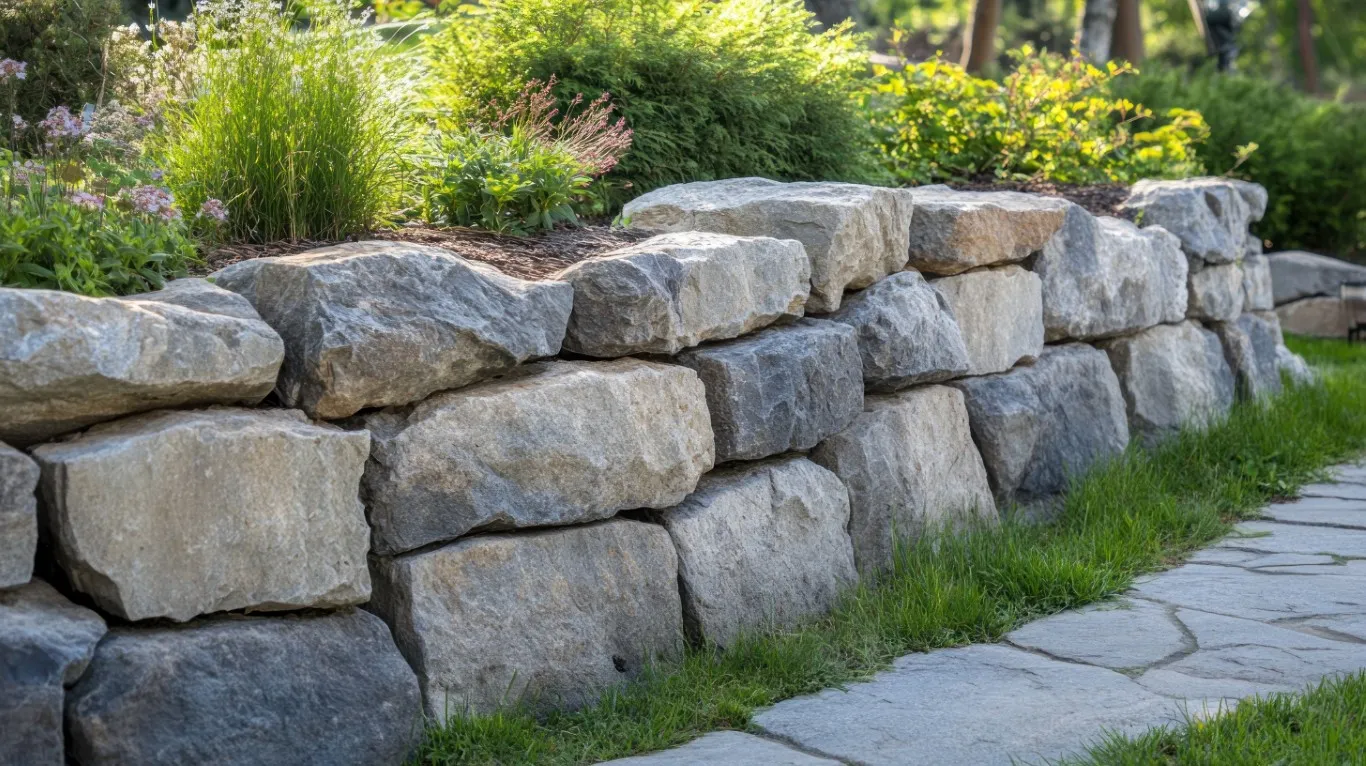
Extensive hardscaping with retaining walls solves functional problems while creating multi-level entertaining spaces. Retaining walls cost $25-50 per square foot for segmented block systems (Allan Block, Versa-Lok), $50-100 per square foot for natural stone. A typical terraced yard project with two retaining walls (50-75 linear feet total## Conclusion
Strategic backyard landscaping delivers measurable returns when you focus on projects that solve problems, extend living space, and appeal to broad buyer preferences rather than personal taste. The highest-value improvements (professional landscaping design, quality hardscaping, outdoor kitchens, and strategic plantings) typically recover 70-150% of costs in markets like Utah’s Wasatch Front, while purely decorative elements rarely move the needle on appraised value. If you’re ready to transform your outdoor space into a value-driving asset, contact Utah Valley Landscaping for a consultation that aligns your budget with projects proven to increase property values.
Frequently Asked Questions
Q: What backyard landscaping projects have the best ROI?
A: Professional landscape design, paver patios, outdoor kitchens, and mature tree planting consistently deliver the strongest returns, often recovering 80-150% of investment in competitive markets. Focus on functional improvements that extend usable living space and solve drainage or privacy issues rather than purely decorative features. Projects addressing specific problems (erosion control, poor drainage, lack of shade) typically appraise higher than aesthetic upgrades alone.
Q: How much should I budget for a complete backyard renovation?
A: Complete backyard transformations typically range from $25,000-75,000 for quarter-acre properties, depending on existing conditions and scope. Budget 10-15% of your home’s value for landscaping that proportionally matches your neighborhood, as over-improving beyond local standards rarely recovers costs. Phasing projects over 2-3 years allows you to prioritize high-impact elements first while spreading expenses.
Q: Does a low maintenance backyard increase property value?
A: Low maintenance landscapes appeal to 60-70% of buyers in 2026, particularly busy professionals and retirees who prioritize outdoor enjoyment over upkeep. Xeriscaping, artificial turf, perennial gardens, and automated irrigation systems reduce ongoing costs while maintaining curb appeal. Properties with documented low water usage and minimal maintenance requirements sell faster in drought-conscious markets throughout the western United States.
Q: Should I install landscaping before selling my home?
A: Strategic pre-sale landscaping (fresh mulch, seasonal color, lawn restoration, trimmed trees) returns 100-200% at closing, while major projects started within six months of listing rarely recover full costs. Focus on curb appeal, obvious problem fixes, and maintenance rather than complete redesigns if selling soon. Buyers discount project costs by 30-50% when they see unfinished or neglected landscaping, making basic upkeep essential.
Q: How does climate affect backyard landscaping ROI in Utah?
A: Utah’s semi-arid climate makes water-efficient landscaping, shade structures, and drought-tolerant plantings particularly valuable, often adding 5-8% to property values compared to water-intensive designs. Xeriscaping with native plants reduces water bills by 30-60% while meeting increasing municipal restrictions on turf coverage. Covered patios and shade elements extend outdoor season use from May through October, maximizing entertainment space value.
Q: What permits do I need for backyard landscaping projects?
A: Most Utah municipalities require permits for structures over 120 square feet (pergolas, gazebos, sheds), retaining walls exceeding 4 feet in height, and any electrical or gas line work for outdoor kitchens. Fence installations, irrigation systems, and standard planting beds typically don’t require permits but must respect setback requirements and utility easements. Check with your local building department before starting hardscaping or structure projects to avoid costly compliance issues.
Q: How long does professional backyard landscaping take to complete?
A: Comprehensive backyard projects typically require 2-6 weeks depending on scope, with hardscaping (patios, retaining walls) taking 1-2 weeks and planting/softscaping adding another 3-7 days. Weather delays, material availability, and permit processing can extend timelines by 1-3 weeks in spring and early summer when contractors face peak demand. Phased approaches allow you to complete priority areas first while maintaining yard access and controlling budget.