

The Smarter Way to Beautiful, Water-Wise Landscapes
You don’t have to rip out your entire lawn in one overwhelming weekend to create a stunning, water-efficient yard. That’s the myth that stops most homeowners from ever starting their drought tolerant landscaping journey, and it’s simply not true.
The reality? The most successful conversions happen in strategic phases, spreading the work, cost, and visual transformation across months or even a full year. This approach keeps your property looking intentional and attractive throughout the process, not like a construction zone or an abandoned lot.
Drought tolerant landscaping can reduce outdoor water use by 50-80% compared to traditional grass lawns, according to the EPA WaterSense program. For the average Utah household using 100,000-200,000 gallons outdoors annually, that translates to tangible savings on every water bill while creating a landscape that thrives in our climate instead of fighting against it.
At Utah Valley Landscaping, we’ve guided hundreds of property owners through this exact transformation. Our phased approach means you can start small, see results, and expand your water-wise landscape at a pace that fits your budget and comfort level. You’ll end up with a yard that’s not just drought tolerant, but genuinely more beautiful, diverse, and interesting than the grass monoculture you’re replacing.
What Is Drought Tolerant Landscaping? (And Why It’s Not Just Cacti and Rocks)
Drought tolerant landscaping is a design approach that prioritizes plants, materials, and irrigation methods adapted to naturally drier conditions, requiring 50% or less of the water traditional landscapes demand. This isn’t about creating a desert moonscape in your front yard. It’s about working with nature instead of against it.
The confusion often starts with terminology. Xeriscaping, coined by Denver Water in 1981, refers to the seven principles of water-efficient landscaping (smart planning, soil improvement, appropriate plants, practical turf areas, efficient irrigation, mulching, and proper maintenance). Water-wise landscaping and low water landscaping are broader terms that encompass the same philosophy. They’re all describing the same goal: beautiful outdoor spaces that don’t drain your water resources or your wallet.
The aesthetic possibilities are genuinely stunning. Think native ornamental grasses that shift with every breeze, creating movement and texture no static lawn can match. Picture blooming perennials in purples, reds, and yellows that attract butterflies and hummingbirds throughout the growing season. Imagine sculptural succulents, silvery artemisia, fragrant lavender, and architectural agave plants arranged in layers that create depth and visual interest.
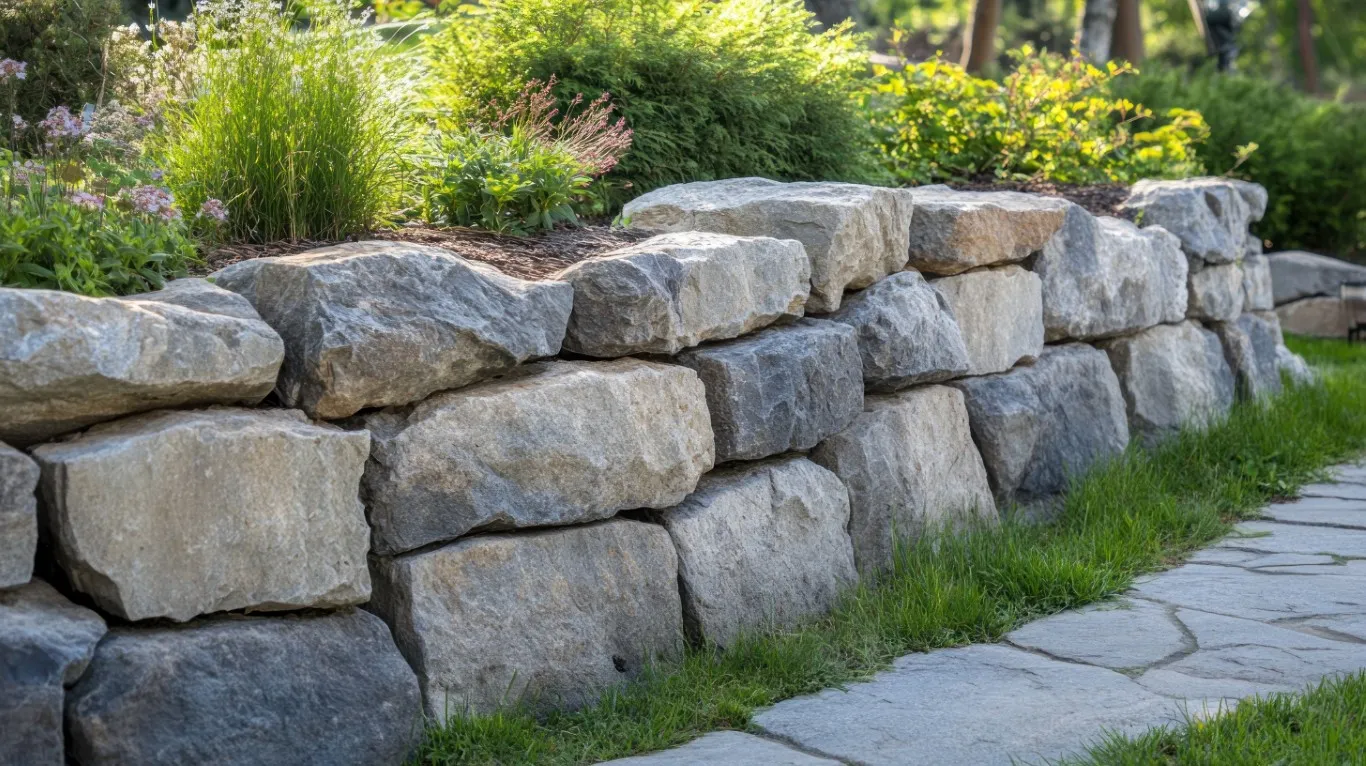
Real drought tolerant landscape design incorporates diverse plant heights, complementary colors, seasonal interest, and carefully planned hardscaping elements like natural stone pathways, decorative boulders, and permeable paving. The best examples look lush and intentional, not sparse or neglected. Many visitors to well-designed drought tolerant yards don’t even realize they’re looking at water-conscious landscaping until someone mentions it.
The Real Costs and Savings: What to Expect From Your Investment
A complete drought tolerant landscape conversion typically costs between $8-$18 per square foot for professional installation, depending on design complexity, plant selection, and hardscaping elements. For a typical 2,500 square foot front yard, that translates to $20,000-$45,000 for a full transformation. Before that number scares you off, understand that phased approaches drastically reduce the immediate financial burden.
Phase 1 starter projects (500-800 square feet, targeting high-visibility areas) typically run $4,000-$10,000. Phase 2 expansions (1,000-1,500 square feet) average $8,000-$20,000. Phase 3 finishing touches and remaining areas round out the budget. This staged investment approach spreads costs across 12-18 months while delivering immediate visual and functional improvements.
The ROI timeline is more compelling than most homeowners expect. A Utah homeowner we worked with in Orem replaced 1,800 square feet of front lawn in spring 2024. Her May-September water bills dropped from an average of $185 monthly to $78, saving $107 per month during peak season. Over five peak months, that’s $535 annually. Her $12,500 project investment will break even in approximately 23 years from water savings alone.
But that calculation ignores the hidden costs of traditional lawn maintenance. When you factor in fertilizer ($150-300 annually), weed control ($100-200), aeration ($75-150), mower fuel or service ($200-400), your traditional lawn costs $525-$1,050 yearly to maintain beyond water bills. Drought tolerant landscapes reduce maintenance costs by approximately 60-75%, saving an additional $315-$788 annually.
Run your own calculation: multiply your irrigated lawn square footage by your typical cost per gallon (check your water bill), then multiply by expected reduction percentage (use 60% as a conservative estimate). Add your annual maintenance costs and multiply by 0.70 for a 70% reduction. Your combined annual savings divided into your project cost gives you a realistic payback period, typically 10-18 years. After that, it’s pure savings.
Your Phased Conversion Roadmap: From Traditional Lawn to Drought-Tolerant Paradise
A successful conversion follows a strategic sequence that maintains curb appeal while steadily expanding your water-efficient landscape. This roadmap works whether you’re doing it yourself or working with professionals like Utah Valley Landscaping.
Phase 1: Quick Wins (Months 1-3, Budget $4,000-$8,000)
Start with your most visible, highest-impact area: typically the front yard strip between sidewalk and house, or the area immediately flanking your front entrance. These zones deliver maximum curb appeal improvement per dollar spent and let you test your comfort level with the new aesthetic.
Specific actions include removing 500-800 square feet of turf, amending soil with compost to improve drainage, installing drip irrigation on a separate zone from remaining lawn areas, adding 3-4 inches of decorative mulch, and planting a curated selection of 15-25 drought resistant plants in varying heights and textures. Include at least one statement plant (like a large ornamental grass or sculptural yucca) as a focal point.
Best timing: Start this phase in early fall (September-October) when plants establish roots before winter, or early spring (April) for immediate growing season impact. Focus on the area visitors and neighbors see first. Your goal is generating compliments and proving the concept works.
Expected results: immediate 20-30% reduction in outdoor water use, zero mowing time in converted areas, and a landscape that looks deliberately designed rather than experimental. This phase builds your confidence for the bigger transformations ahead.
Phase 2: Major Transitions (Months 4-9, Budget $8,000-$18,000)
This phase tackles your largest remaining lawn area, typically the main front or back yard expanse. You’re now committed to the transformation and ready for significant change.
Remove 1,200-1,800 square feet of additional turf. This is when hardscaping elements like flagstone pathways, seating areas with decomposed granite, or dry creek beds for drainage make sense. Expand your drip irrigation system to cover new planting areas. Create planting “zones” that group plants with similar water needs. Install 40-70 additional plants, focusing on filling space and creating mass plantings of 3-5 of the same species for visual impact rather than one of everything.
Best timing: tackle this phase in spring (April-May) so plants have a full growing season to establish, or split it across fall and the following spring if budget requires. If keeping any turf, reduce it to a single defined area (kids’ play zone, pet area, or small gathering space) rather than scattered patches.
Expected results: 50-60% reduction in total outdoor water use, dramatic visual transformation that announces your yard’s new identity, and substantially reduced weekend maintenance time. Your landscape now clearly follows a cohesive design vision rather than looking transitional.
Phase 3: Final Touches (Months 10-18, Budget $3,000-$8,000)
The finishing phase addresses remaining lawn pockets, side yards, parking strips, and refinement details that elevate your landscape from good to exceptional.
Complete any remaining turf removal in low-priority areas. Add accent boulders, upgrade lighting to highlight specimen plants, install garden art or water features, refine planting bed edges with metal or stone borders, and fill any remaining gaps with groundcovers or mulch. This phase is about polish and personality.
Best timing: spread this across whatever timeline your budget allows. These elements are important but not urgent, so they can happen as funds and energy permit.
Expected results: 70-80% total reduction in outdoor water use, a completely cohesive landscape where every element serves a purpose, and a yard that reflects your personal style while functioning beautifully in your climate. You’re now the neighborhood example others will ask about.
Best Drought Tolerant Plants for Your Climate Zone
Native drought tolerant plants adapted to Utah’s USDA zones 4-8 perform best with minimal intervention once established. These selections thrive in our hot, dry summers and cold winters, requiring watering only every 7-14 days after the first growing season, compared to daily watering for traditional lawns.
Groundcovers and Low-Growing Plants (under 12 inches)
Creeping Thyme (Thymus serpyllum): 2-4 inches tall, full sun, fragrant foliage, purple-pink summer blooms, tolerates foot traffic, spreads 12-18 inches, excellent between pavers.
Blue Grama Grass (Bouteloua gracilis): 6-12 inches, full sun, native prairie grass, distinctive horizontal seed heads, requires mowing only once or twice annually, spreads slowly.
Sedum (Sedum spurium varieties): 4-6 inches, full sun to part shade, succulent foliage in greens, reds, and purples, summer flowers, spreads 12-24 inches, outstanding for slopes.
Medium Shrubs and Perennials (1-3 feet)
Penstemon (Penstemon species): 18-36 inches depending on variety, full sun, tubular flowers in reds, purples, blues, attracts hummingbirds, many species native to Utah, blooms late spring through summer.
Russian Sage (Perovskia atriplicifolia): 24-36 inches, full sun, silvery foliage with lavender-blue summer flowers, aromatic, deer resistant, provides excellent texture contrast.
Fernbush (Chamaebatiaria millefolium): 3-6 feet, full sun, native Utah shrub, fern-like foliage, white summer blooms, extremely drought tolerant once established, excellent wildlife value.
Apache Plume (Fallugia paradoxa): 3-6 feet, full sun, native southwestern shrub, white flowers followed by feathery pink seed heads, thrives in poor soil, architectural form.
Tall Accent Plants and Structural Elements (3+ feet)
Blue Avena Grass (Helictotrichon sempervirens): 24-30 inches (foliage), blue-gray spiky clumps, full sun, dramatic architectural form, provides winter interest, minimal care.
Red Yucca (Hesperaloe parviflora): 3-4 feet, full sun, evergreen grass-like foliage, coral-red flower spikes spring through fall, humming## Conclusion
Drought tolerant landscaping isn’t about giving up the beauty of your yard. It’s about creating a more resilient, sustainable outdoor space that thrives in Utah’s climate while dramatically reducing water use and maintenance. By converting your landscape in manageable phases and choosing the right mix of native plants, hardscaping, and efficient irrigation, you can transform your property into a stunning, low-maintenance oasis that saves money and conserves our precious water resources. Ready to start your drought tolerant landscape transformation? Contact Utah Valley Landscaping today for a free consultation and discover how we can help you create the water-wise yard you’ve been dreaming of.
Frequently Asked Questions
Q: How much can I save on my water bill with drought tolerant landscaping?
A: Most homeowners see water bill reductions of 30 to 60 percent after converting to drought tolerant landscaping, with some achieving even higher savings depending on how much lawn they replace. In Utah’s climate, replacing 1,000 square feet of turf grass can save approximately 40,000 to 50,000 gallons of water per year. These savings typically result in a payback period of 3 to 7 years for the initial landscape investment.
Q: Will drought tolerant landscaping increase my home’s property value?
A: Yes, professionally designed drought tolerant landscapes typically increase property values by 5 to 15 percent in water-conscious markets like Utah. Buyers increasingly view water-wise landscaping as a premium feature that reduces ongoing costs and demonstrates environmental responsibility. Well-executed xeriscaping with quality hardscaping and native plants often appeals more to buyers than high-maintenance traditional lawns.
Q: How long does it take for drought tolerant plants to become fully established?
A: Most drought tolerant plants require regular watering for the first one to two growing seasons while their root systems establish. Native plants typically establish faster than non-natives, often becoming fully drought tolerant within 12 to 18 months. Once established, these plants require minimal supplemental watering (often just once or twice per month during the hottest periods).
Q: Can I have any grass at all in a drought tolerant landscape?
A: Absolutely. Many successful drought tolerant designs incorporate small areas of turf grass for functional purposes like play areas or pet spaces. The key is limiting grass to 25 to 30 percent of your total landscape and choosing lower-water varieties like tall fescue or buffalo grass. Strategic placement of these grass areas where they’ll actually be used makes your landscape both beautiful and practical.
Q: What is the best time of year to start converting to drought tolerant landscaping?
A: Spring (April through May) and fall (September through October) are ideal times to begin drought tolerant landscape conversions in Utah. These seasons provide moderate temperatures and natural rainfall that help new plants establish with less supplemental watering. Fall planting is especially beneficial because it gives root systems all winter to develop before facing summer heat stress.
Q: Do I need to remove all my existing plants when converting to xeriscaping?
A: Not necessarily. Many existing trees and shrubs can be incorporated into your new drought tolerant design if they’re healthy and reasonably water-efficient. Mature trees especially should be preserved when possible, as they provide shade, wildlife habitat, and established beauty. A landscape professional can assess which existing plants are worth keeping and how to integrate them into your water-wise design.
Q: Will I still need an irrigation system with drought tolerant landscaping?
A: Yes, but a much more efficient one. Even drought tolerant plants need supplemental water during establishment and occasional deep watering once mature. A properly designed drip irrigation system uses 30 to 50 percent less water than traditional sprinklers by delivering water directly to plant root zones. Smart controllers that adjust watering based on weather conditions can reduce water use by an additional 20 to 40 percent.