
A fire pit in the wrong spot, built from the wrong materials, becomes a cracked, smoky feature nobody uses. The best outdoor fire pit ideas Utah homeowners can rely on combine freeze-thaw-ready stone or concrete, a fuel type that fits inversion season, and a layout planned around your patio, seating, and evening winds. Here’s how to plan a custom built-in fire pit that fits your yard and your family.
Why Does a Fire Pit Become the Heart of a Utah Backyard?
A fire pit gives your family a reason to stay outside after sunset, extending your outdoor season into spring and fall, weather and burn restrictions permitting.
Utah Valley sits well above 4,000 feet, and the dry mountain air lets temperatures drop quickly once the sun sets behind the west mountains. A warm September afternoon in Highland turns into a hoodie-and-blanket evening fast. Without a heat source, most families head inside.
Imagine a Friday in October. The kids are roasting marshmallows, a neighbor wanders over, and nobody checks the time until the stars are out. Create memories, not just a yard: that is the real value of a fire feature.
A fire pit also gives seating a natural focal point, anchors the patio visually, and draws people to a part of the yard they otherwise ignore after dinner.
Built-In vs. Portable Fire Pits: Which One Fits Your Yard?
A portable fire pit suits renters or homeowners who want flexibility. A built-in fire pit suits families who want a permanent gathering spot that matches the patio, seating, and landscaping around it.
- Portable pros: You can move them around the yard or take them camping. They are quick to set up and easy to replace.
- Portable cons: They often look like an add-on, sit on grass or decking where heat and embers cause damage, and tend to rust after a few Utah winters outdoors.
- Built-in cons: Placement is permanent, so it needs careful planning up front.
- Built-in pros: They match your patio materials, integrate seating walls and lighting, and can connect to a gas line for push-button convenience.
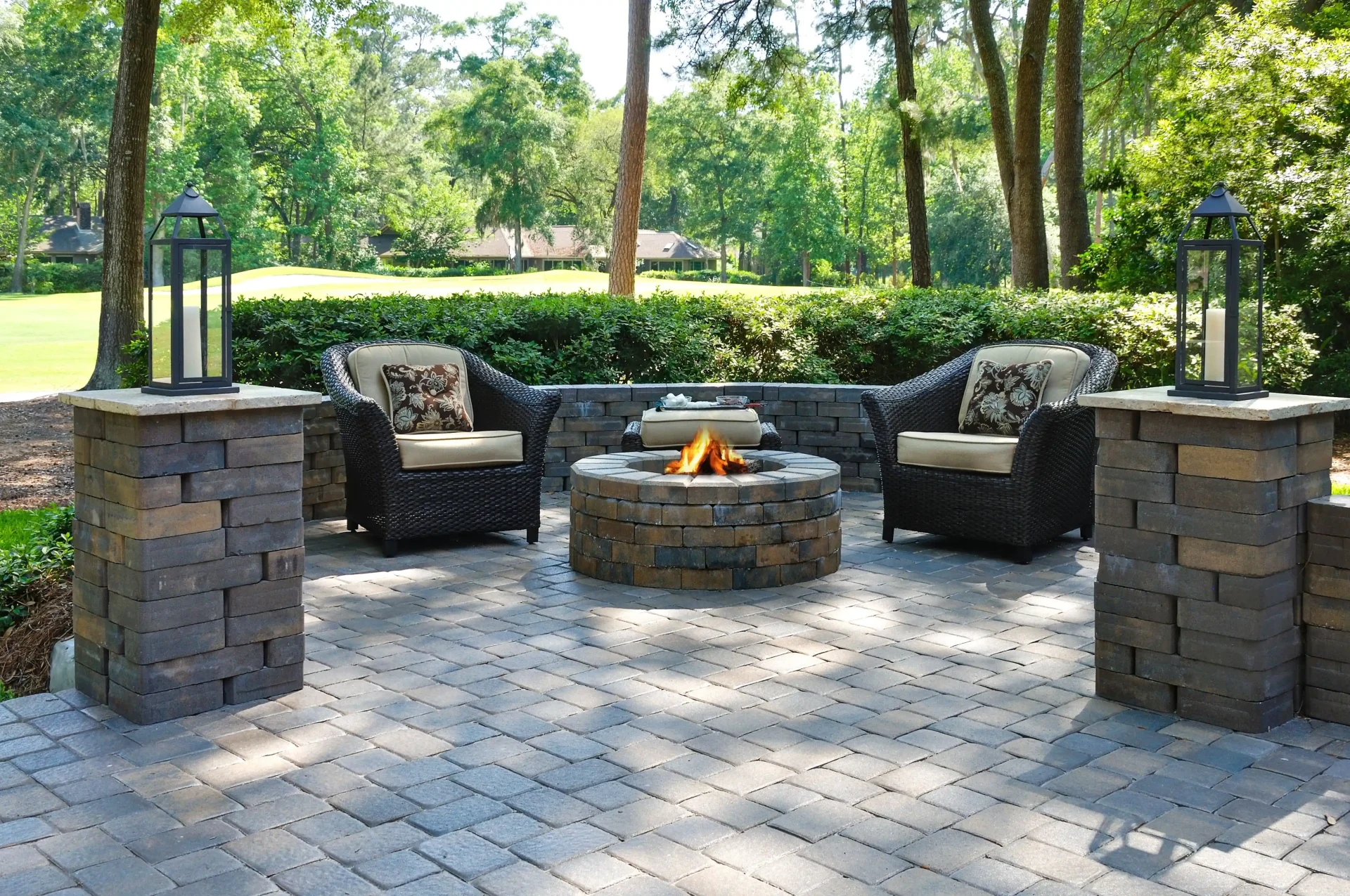
The biggest difference is design cohesion. A built-in fire pit feels like part of the architecture instead of furniture sitting on top of it. Stone or block can echo your home’s exterior, pavers can be shaped around the pit, and seating can be built into the layout. For a space that feels finished, a built-in fire pit installation designed around your patio is usually the better long-term fit.
Gas or Wood-Burning Fire Pit: Which Is Better in Utah?
Gas fire pits offer instant, low-smoke convenience, while wood-burning fire pits deliver the crackle, smell, and stronger heat many families love. In Utah County, winter air quality restrictions on wood burning are a real factor.
The Case for a Gas Fire Pit in Utah
A gas fire pit runs on natural gas or propane and lights with a switch or key valve. There is no wood to store, no ash to scoop, and far less smoke drifting toward your house or your neighbor’s windows.
Trade-offs to weigh:
- Natural gas requires a line run from your home, installed by a licensed professional.
- Propane uses a tank, which needs a ventilated enclosure or hidden storage spot.
- The flame produces less radiant heat than a large wood fire, with no crackle or campfire smell.
Wood-Burning Fire Pits and Utah’s Inversion Season
A wood-burning fire pit gives you the classic campfire experience, including cooking over open flame. It also produces smoke, sparks, and ash, which require more clearance and cleanup.
When cold air traps pollution in the valley, the Utah Division of Air Quality issues air quality action alerts, and on restricted days solid-fuel burning, including wood fires, is limited in counties such as Utah County. A wood-burning pit sits unused on those days. Some rules treat gas appliances differently, but do not assume a gas fire pit is always allowed during a restriction. Check current guidance with Utah DAQ and your city before lighting any fire in winter.
If you plan heavy use in late fall and winter, gas gives you fewer smoke concerns, though cold snaps, snow, and active restrictions still limit use. If your fire nights mostly happen in summer and early fall, wood remains a great choice.
What Are the Best Outdoor Fire Pit Ideas for Utah Homes?
The most popular built-in styles are round, square or rectangular, and linear fire pits, plus sunken and seating-wall designs. The right choice depends on your home’s architecture, your patio shape, and how many people you want to gather.
Round Fire Pits for Classic Conversation Circles
Round pits work beautifully with curved paver patios and circular seating, and suit the craftsman, farmhouse, and mountain-style homes common across Utah County. Everyone faces the center, which keeps conversation flowing.
Square and Rectangular Fire Pits for Clean, Structured Patios
Square pits pair well with rectangular patios and modern or transitional homes, lining up neatly with paver patterns.
Linear Fire Features for Modern Homes
Long, narrow fire features almost always run on gas and create a dramatic flame line. They work well along a patio edge, in front of a built-in bench, or as a divider between dining and lounge areas.
Sunken Fire Pits for a Cozy, Tucked-In Feel
A sunken pit sits below the main patio level with seating stepped down around it, sheltered from breezes. Drainage planning is critical, since low areas collect rain and snowmelt, and water that freezes there damages the build over time.
Seating-Wall Designs for Sloped Lots in Alpine and Highland
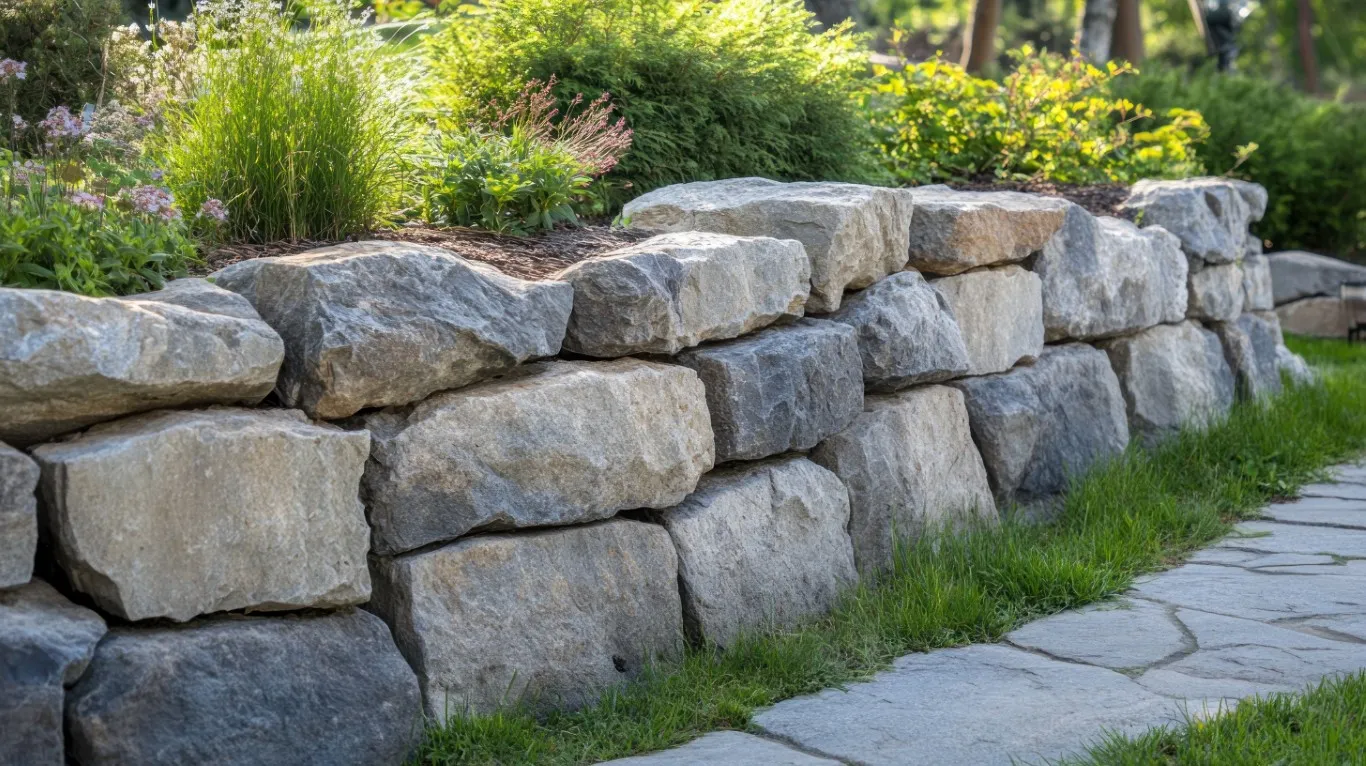
Many homes in Alpine and Highland sit on sloped lots. Here a retaining wall does double duty, holding back the hillside while serving as seating around the fire. Terracing the slope creates a level fire pit patio with a view, turning a hard-to-use hillside into a favorite seat in the yard.
For materials that complement each style, see pavers and hardscaping options for Utah patios.
What Fire Pit Materials Hold Up Best in Utah’s Climate?
Natural stone, concrete block, pavers, and brick all work for Utah fire pits when properly installed, lined for heat, and built to shed water.
Water is the biggest threat. It expands by roughly 9 percent as it freezes, so moisture trapped in porous material pushes outward with every freeze-thaw cycle. Drainage and sealing matter as much as the material itself.
Natural Stone for a Mountain-Inspired Look
Dense stones like granite and quartzite resist moisture absorption and look right at home against Wasatch views. Softer, more porous stones absorb water and wear faster in freeze-thaw conditions.
Concrete for Modern, Clean Lines
Poured or precast concrete creates smooth, contemporary forms, especially for linear gas features. Reinforcement, control joints, and a sealer help it handle temperature swings, and the fire area still needs a heat-rated liner. If you are planning a concrete patio, see how a concrete installation integrates with a built-in fire pit from the start.
Pavers and Retaining Wall Block for a Matched Design
Segmental block and pavers let the fire pit, seating walls, and patio share one cohesive look. Individual units flex slightly with ground movement rather than stressing one solid slab.
Brick and Firebrick for Heat Resistance
Standard face brick provides a warm, traditional look, while firebrick handles high heat inside the burn area. Many builds use decorative stone or block outside and a firebrick or steel ring inside.
Never line a fire pit with river rock or regular gravel. Those stones trap moisture and can crack or burst when heated.
How Do You Integrate a Fire Pit With Your Patio, Seating, and Landscaping?
Place your fire pit on a noncombustible hardscape surface, away from the house and overhanging trees, with seating arranged for conversation and lighting that guides people safely. Plan for wind and smoke drift before anything is built.
A common mistake is choosing a spot that looks good at midday without checking how the space behaves at night. Key layout details:
- Watch evening winds. Near the mountains in Utah County, breezes often shift in the evening as cool air flows downhill from the canyons. Spend a few evenings noting where air moves so smoke drifts away from the house, doors, and neighbors.
- Keep clearance from structures. Your city and fire authority set minimum distances from homes, fences, and property lines. Covered patios and pergolas need extra care.
- Leave room to move. Plan enough space behind seating for people to walk without stepping close to the flame.
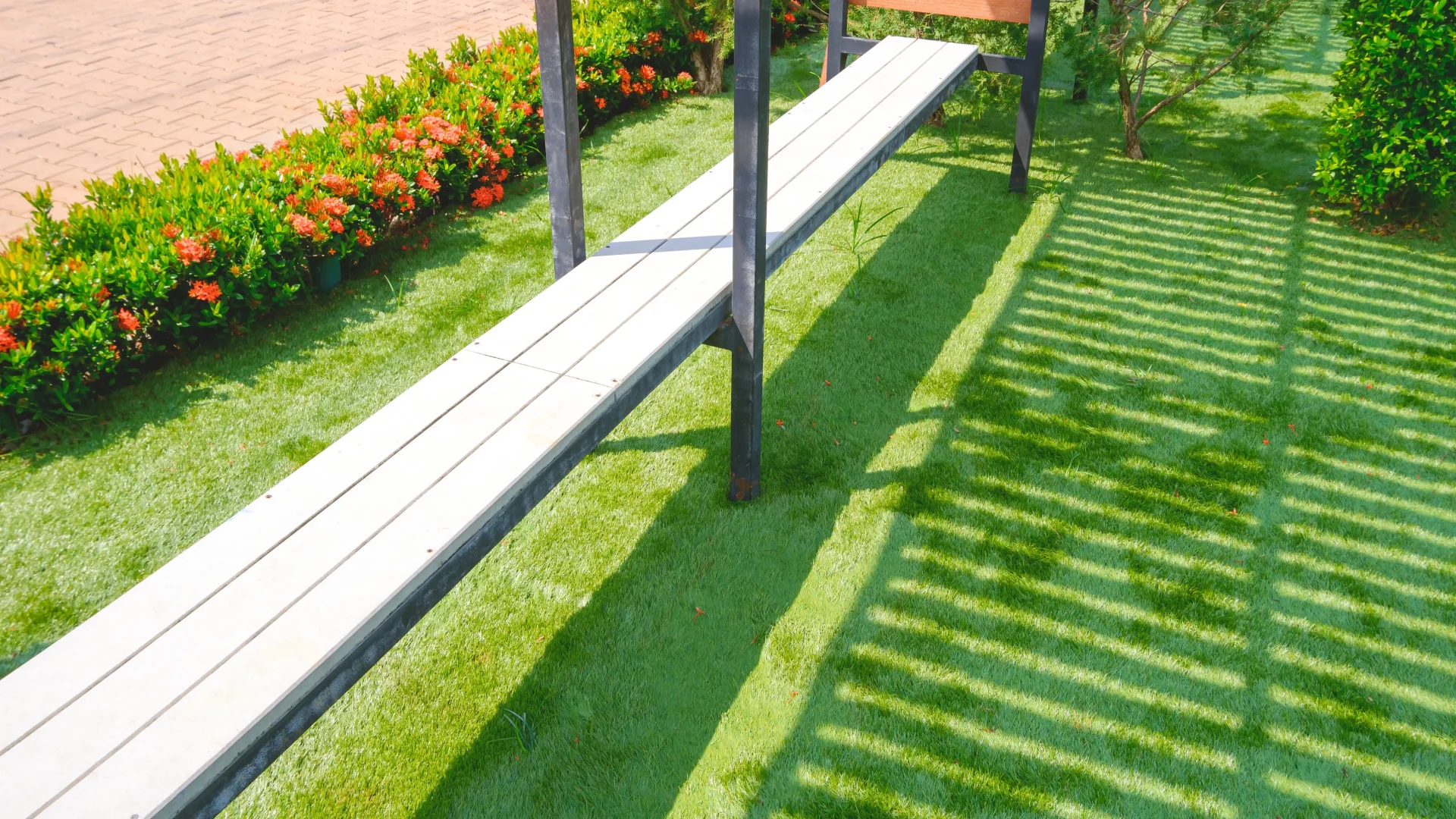
- Protect artificial turf. Heat and embers melt synthetic grass, so surround the pit with a generous buffer of pavers, concrete, or decorative gravel. If your yard includes synthetic grass, review artificial turf installation considerations before finalizing your layout.
- Choose plantings wisely. Keep resinous, highly flammable plants like junipers away from the fire area and favor low-growing, well-watered, or fire-resistant options nearby.
- Light the path, not the flame. Warm, low-glare step lights in seating walls and path lights along walkways keep the fire as the focal point while keeping everyone safe. See how exterior lighting layers into a fire pit patio without washing out the glow.
Have a layout idea but not sure how it fits your lot? Reach out to Utah Valley Landscaping to talk through your fire pit patio plans.
What Permits and Safety Rules Apply to Fire Pits in Utah County?
Before building, check your city’s setback and permit rules, review HOA guidelines, call 811 before digging, and hire licensed professionals for any gas line work.
- Check city rules. Cities across Utah County set their own requirements for recreational fires, setbacks, and permits. Contact your city and local fire authority directly.
- Review HOA guidelines. Many neighborhoods in Alpine, Highland, and across Utah Valley have rules on fire features, materials, or placement.
- Call 811 before digging. Calling 811 connects you with Blue Stakes of Utah, which marks underground gas, power, and water lines.
- Use licensed professionals for gas. Natural gas and propane connections must be installed by a licensed professional and inspected where required.
- Follow burn guidance. Check air quality alerts before lighting a wood fire, especially from late fall through winter.
- Keep safety gear close. Have a fire extinguisher, hose, or bucket of water nearby, and never leave a fire unattended.
How Do You Plan a Fire Pit as Part of a Complete Backyard Design?
The best fire pits are designed alongside the patio, seating walls, lighting, and landscaping as one plan. Gas lines, lighting wire, and drainage are easiest to install before pavers or concrete go down, so planning them together avoids tearing up finished hardscape later.
Utah Valley Landscaping handles design through installation: pavers and hardscaping, retaining walls, concrete patios, outdoor lighting, artificial turf, and landscaping, with any gas connections completed by licensed professionals. Every fire pit is custom-tailored to your lot, your home’s style, and the way your family spends evenings together.
Ready to see what a complete fire pit patio could look like in your yard? Utah Valley Landscaping designs and installs fire pits in Utah County as part of a full outdoor living plan, so nothing gets added as an afterthought. If you are pricing out a project that includes hardscape, seating walls, and a fire feature together, that is exactly how we work. Get in touch to start the conversation about your space.
Cost depends on size, materials, fuel type, and site conditions like slope and access, so the most accurate answer comes from looking at your actual yard.
Ready to plan your outdoor space? Get a Free Estimate from Utah Valley Landscaping, or call (801) 899-9199 to talk about fire pit installation in Utah County and how it fits into your complete backyard design.
Frequently Asked Questions
Are outdoor fire pits allowed in Utah County?
Yes, outdoor fire pits are generally allowed in Utah County, but each city sets its own rules for recreational fires, setbacks, and permits. Your local fire authority may also restrict burning during high fire danger periods in summer and during winter air quality alerts. If you live in a neighborhood with an HOA, check its guidelines as well, since some limit fuel type, materials, or placement. Confirm the current rules with your city before you build so your fire pit is usable the day it’s finished.
What is the best fuel type for a backyard fire pit in Utah?
The best fuel type depends on when and how you plan to use your fire pit. Gas works well for families who want quick, low-smoke fires with no ash cleanup, especially in late fall and winter when wood smoke is a bigger concern. Wood suits families who mainly use the fire pit in summer and early fall and want the crackle, campfire smell, and ability to cook over open flame. If you’re torn, think about how often you’ll realistically haul wood and clean out ash compared to how much you value the traditional experience.
How far does a fire pit need to be from a house or fence?
Required distances vary by city and fire authority, so no single number applies across all of Utah County. Your local fire code will set minimum clearances from homes, fences, property lines, and other structures, and wood-burning fire pits often need more space than gas units. Covered patios, pergolas, eaves, and overhanging tree branches deserve extra caution because heat and sparks rise. Contact your city or fire marshal before choosing a final location.
Can I add a gas fire pit to an existing patio?
In many cases, yes. The main challenge is running a gas line to the fire pit location, which may mean trenching through the yard and lifting or cutting part of the patio. Paver patios are usually easier to work with because individual pavers can be removed and reset, while poured concrete may need to be cut and patched. A licensed professional must handle the gas connection, and a site visit will show whether natural gas or a hidden propane tank makes more sense for your layout.
What material is best for a built-in fire pit in Utah’s climate?
Dense natural stone like granite or quartzite, quality concrete block, and pavers all perform well in Utah when installed correctly. Because freeze-thaw cycles damage materials that hold water, the best choice is one that resists moisture and is built with proper drainage. The burn area needs a heat-rated liner such as firebrick or a steel ring, no matter what material forms the exterior. Avoid porous, soft stones and never use river rock or regular gravel inside the fire bowl.
Can you have a wood fire pit during Utah’s inversion season?
Not on days when the Utah Division of Air Quality restricts solid-fuel burning in your county. During winter inversions, cold air traps pollution in the valley, and wood fires add to the problem, so restricted days can leave a wood fire pit off limits. You can still use a wood fire pit on days without restrictions, but check air quality alerts at air.utah.gov before lighting one. If you want reliable winter use, a gas fire pit is often the more practical option, though you should still confirm it is permitted during any active restriction.
How much does a built-in fire pit add to a landscaping project?
The cost of a built-in fire pit depends on its size, materials, fuel type, and site conditions like slope, access, and drainage needs. A simple wood-burning pit built into a new patio typically adds less than a gas feature that requires a new line, or a design with seating walls, lighting, and terracing. Planning the fire pit alongside the rest of your hardscape can also save money by avoiding rework on finished surfaces later. For an accurate number, request an estimate based on your actual yard and design goals.
Your Utah Backyard Deserves Evenings Worth Staying Outside For
Most Utah homeowners know they want a fire pit. The harder part is ending up with one that actually gets used, fits the space, holds up through freeze-thaw winters, and doesn’t create headaches with permits, gas lines, or burn restrictions the first season.
Leaving that problem unsolved means more evenings cut short, more square footage of patio that sits empty after dark, and a backyard that never quite becomes the gathering place your family wanted. A poorly planned fire pit, or one installed as an afterthought without proper drainage, materials, or clearance, can cost more to fix than it would have to build correctly the first time.
Utah Valley Landscaping designs and installs fire pits as part of a complete outdoor living plan across Utah County, from the fire pit itself through the patio, seating walls, lighting, and landscaping that makes the whole space work together. Every project is custom to your lot, your family, and how you actually spend time outside.
When you are ready to stop planning and start building, the next step is a conversation about your yard. Contact Utah Valley Landscaping to get a free estimate on your fire pit and outdoor living project.