

A backyard court built on a rushed base can heave and crack under Utah’s freeze-thaw cycles long before your family is done playing on it. Pickleball court installation in Utah depends on four things: enough level space, the right surface, a compacted, well-drained base, and early city and HOA checks. Every sports court installation Utah Valley Landscaping takes on starts with your specific yard.
Why Is a Backyard Pickleball Court So Appealing to Utah Valley Families?
A backyard pickleball court gives your family a place to play together right outside the back door. You don’t have to drive to a public court or wait for an open spot. Because the game is simple to learn, kids, parents, and grandparents can share the same court on the same evening.
Picture a summer night in Alpine or American Fork. The heat is easing, the light is turning gold on Timpanogos, and the whole family is on the court. Teenagers are talking trash, grandparents are holding their own at the kitchen line, and the little ones are chasing stray balls. That’s the real appeal: a reason for everyone to put down their phones and come outside.
Getting there takes some planning. If you’ve searched for “backyard pickleball court Utah,” you’ve probably found advice written for milder climates. If you’re still deciding between pickleball, basketball, or a mix, our broader guide to backyard sports courts is a good place to start. This guide stays focused on pickleball.
Fall is a comfortable time to begin planning. The off-season gives you room to settle design choices and talk with your city and HOA before the next building season.
How Much Space Do You Need for a Backyard Pickleball Court?
The painted lines of a regulation pickleball court measure 20 feet wide by 44 feet long. Safe play needs extra paved space beyond those lines. A commonly recommended total footprint is roughly 30 by 60 feet, and a little more is better if your yard allows it.
Key Pickleball Court Size Requirements
- Playing area: 20 by 44 feet, the same for singles and doubles
- The kitchen: this non-volley zone extends 7 feet from the net on each side. Players can’t hit the ball out of the air while standing in it, which creates the game’s soft “dinking” exchanges.
- Net height: 36 inches at the sidelines and 34 inches at the center
- Run-off space: the paved area outside the lines where players chase wide shots and deep lobs
Run-off space is a part homeowners commonly underestimate. If a court fits the lines but leaves no room behind the baseline, it feels cramped, and players are more likely to trip on an edge or run into a fence.
Options for Tight or Sloped Yards
- Stake it out first. Run string lines around the full footprint so you can see how it sits against the house, trees, and property line.
- Trim side margins thoughtfully. For casual family play, you can reduce side margins slightly as long as the ends keep enough room for backcourt play.
- Orient for the sun. A north-south layout keeps low morning and evening sun out of players’ eyes.
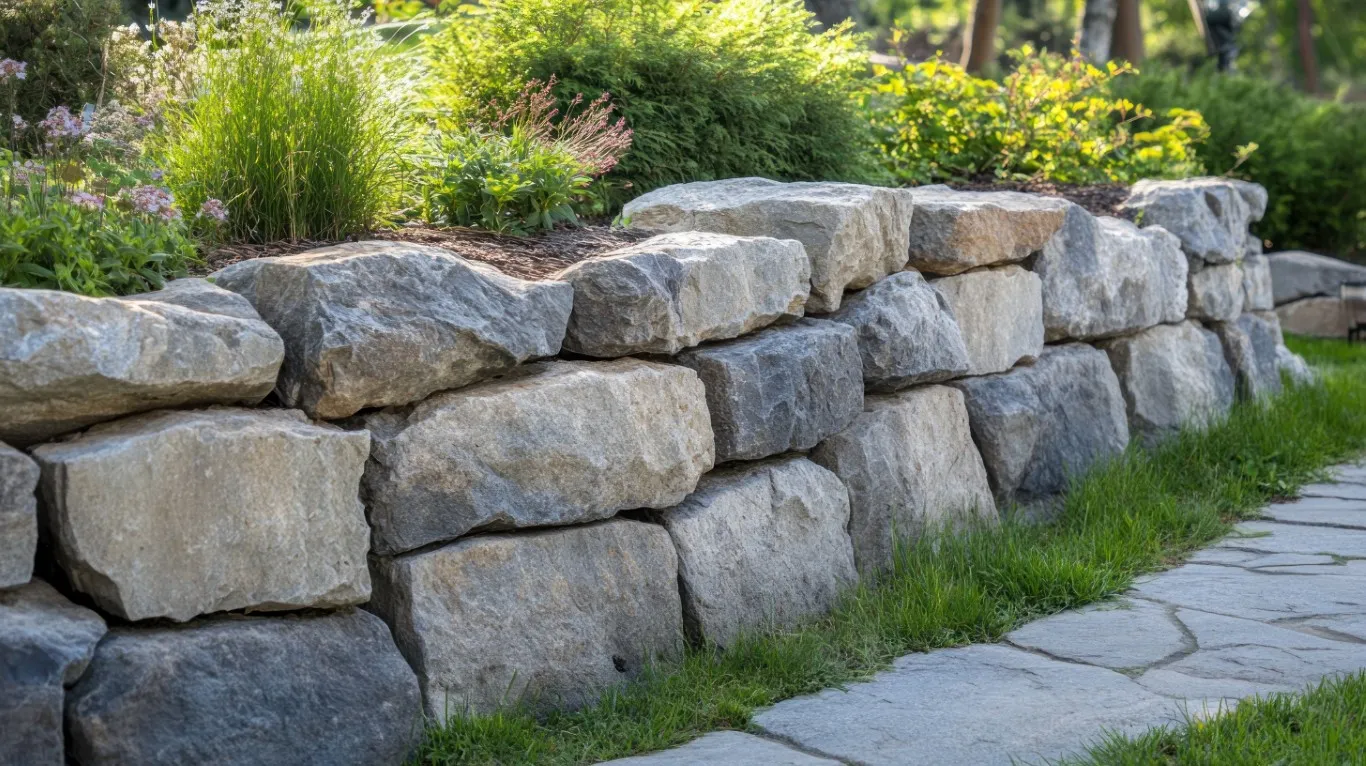
- Create level ground. On bench lots in Alpine, Highland, and along the valley’s east side, a court often sits on a terrace built with retaining walls designed for sloped Utah lots.
What Are the Best Pickleball Court Surface Options in Utah?
You’ll most often run into three pickleball court surface options: coated concrete, asphalt, and modular sport tiles. For a home court in Utah Valley, a common choice is reinforced concrete with a textured acrylic coating. It stays stable, plays consistently, and handles multi-sport lines well.
Coated Concrete
Concrete gives you a firm, true bounce, and an acrylic coating adds grip and color. How well it holds up in winter depends on the base underneath and on well-placed control joints. These joints are cuts that guide concrete’s natural shrinkage cracks into straight, planned lines.
Utah’s strong, high-elevation sun fades coating colors over time, so you’ll need to recoat the court periodically. Lighter colors also stay more comfortable underfoot in July. Our concrete installation work is built around these local conditions.
Asphalt
You’ll see asphalt on some older courts and occasionally in contractor proposals. It feels slightly softer than concrete. In Utah, it softens in summer heat and becomes brittle under intense UV, and it tends to crack through freeze-thaw cycles, so it needs regular sealing and repair. If someone proposes asphalt, ask how they’ll build the base and what resurfacing will involve.
Modular Sport Tiles
Modular tiles are interlocking plastic panels that snap together over a hard, flat slab. They have some give underfoot, water drains through their perforations, and you can swap out a damaged tile on its own. Even so, they still need a properly built slab below them, and they play and sound different from a coated surface.
Surface Comparison at a Glance
- Feel underfoot: concrete is firm and consistent, asphalt is slightly softer, and tiles have noticeable give.
- Utah climate: concrete relies on good base and joint design, asphalt softens in heat and ages under UV, and tiles expand and contract with temperature swings.
- Maintenance: concrete needs periodic recoating and crack repair, asphalt needs sealing and resurfacing, and tiles need cleaning and occasional replacement.
- Multi-sport flexibility: all three can hold multiple line sets, and concrete and tiles give basketball a firm bounce.
Why Does the Sub-Base Matter So Much for a Utah Pickleball Court?
The base beneath your court decides whether it stays flat and playable through Utah winters. A compacted gravel base over prepared soil, plus grading that moves water away, limits the frost heave and settling that crack slabs.
When water trapped in soil freezes, it expands and pushes upward. As it thaws, the soil settles. Repeat that cycle all winter and an unprepared slab starts to lift, tilt, and crack. Every outdoor pickleball court Utah County homeowners build has to handle this same cycle.
Soils vary across Utah County. Some areas have clay that holds moisture and swells, while bench areas often have rocky, gravelly soil. Some newer subdivisions sit on placed fill that needs careful evaluation. Utah State University Extension offers useful background on local soils.
A well-built base typically involves these steps:
- Evaluate the soil and remove organic or unstable material
- Add geotextile fabric, a layer that keeps soil and gravel separate, where conditions call for it
- Place road base in layers and compact each one
- Grade the court with a slight slope so water sheds instead of pooling
- Direct runoff away from the slab and the house
- Keep downspouts and sprinkler overspray off the court edges
That last step matters in water-conscious yards. Overspray wastes water and keeps the court edges saturated, and low-water plantings or artificial turf around the court solve both problems. Craftsmanship counts most right here, in the layers you’ll never see.
What Fencing, Lighting, and Net Systems Does a Home Pickleball Court Need?
Most home courts need containment fencing and a net system, plus lighting if you want evening play. Plan all three before the pour so post sleeves, footings, and electrical conduit go in the right spots instead of being cut into finished concrete later.
Fencing and Windscreens
Fencing keeps balls out of flower beds and neighbors’ yards. Windscreens help on exposed lots, including those near canyon mouths where winds can be strong. Sound is also worth planning for, because the “pop” of paddles carries, so consider where the court sits relative to a neighbor’s patio. Fence rules vary by city and HOA.
Court Lighting
Lighting lets you play into cool summer evenings. Good court lighting spreads light evenly and uses shielded fixtures to keep glare out of players’ eyes and light off neighboring homes. Our exterior lighting services can connect court lights with patio and pathway lighting for a cohesive look across the whole yard.
Net Systems
- Permanent posts: set in sleeves anchored in concrete footings for a tight, stable net
- Portable nets: freestanding frames that you roll out and store away
- Sleeved removable posts: a middle ground that lifts out when you want open space for basketball or play
Can You Combine a Pickleball Court With Other Backyard Features?
Yes. A pickleball court fits easily into a multi-sport backyard court layout, and it pairs naturally with turf, trampolines, and gathering spaces. When these pieces are designed together, a single-purpose slab becomes outdoor space you won’t want to leave.
- Blended lines: pickleball lines in a contrasting color alongside basketball lines
- A hoop at one end: an in-ground basketball system anchored beyond the baseline
- Turf surrounds: artificial turf gives you soft, green run-off space without regular watering
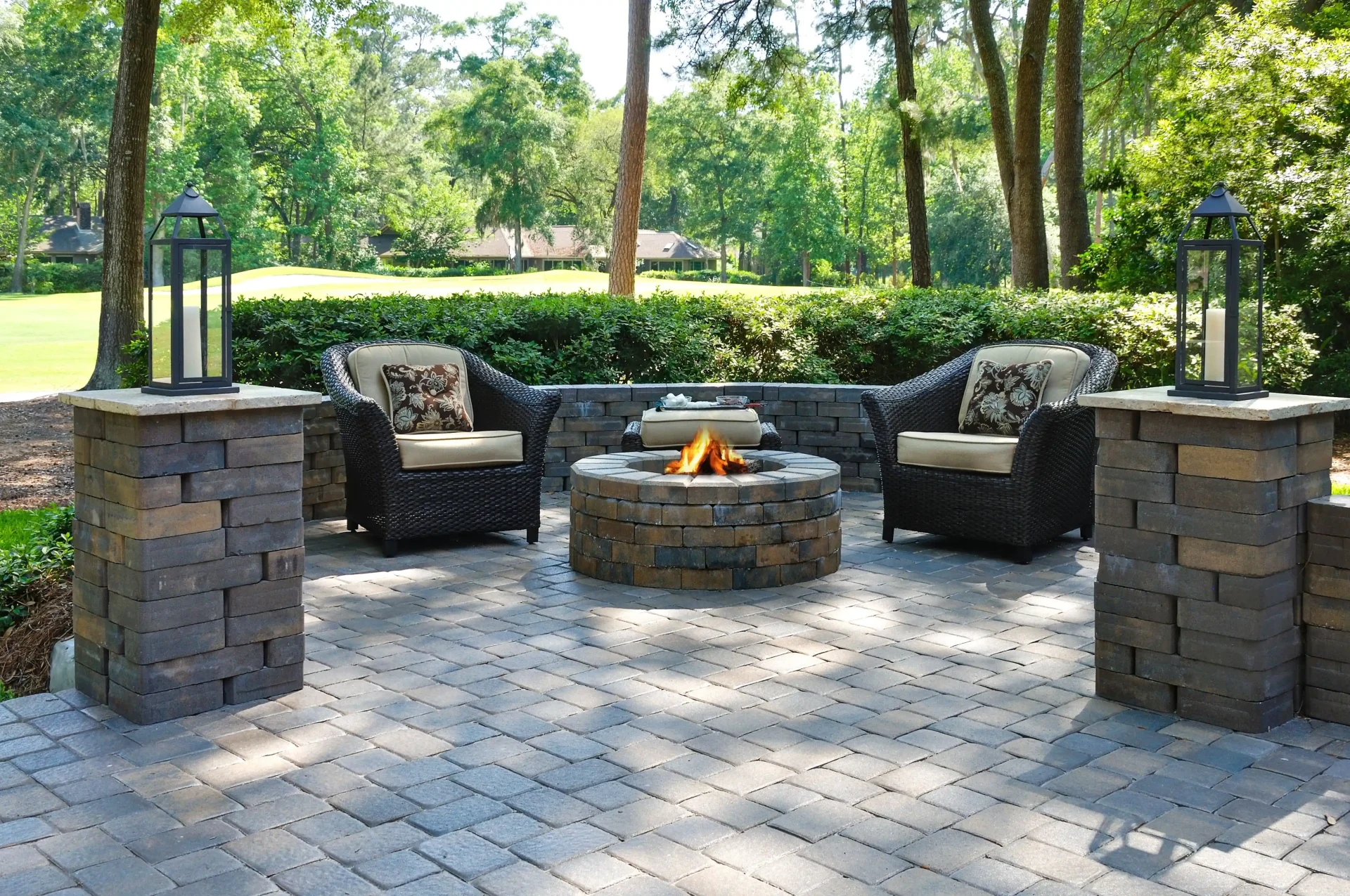
- A spectator spot: a paver patio or fire pit where everyone can linger after the last game
Imagine a pickleball court Highland Utah families would love, set on a backyard with a gentle slope. It has a terraced court with a retaining wall, turf along one side, and a fire pit patio overlooking it all. Every piece has its place because the yard was planned as one design.
That’s the heart of every custom sports court Utah Valley Landscaping designs: a yard where the court, the gathering space, and the surrounding landscape all work as one. For more ideas on how these pieces come together, see our guide to choosing between pickleball and basketball for your backyard.
If you’re ready to see how a court could sit in your specific yard, contact Utah Valley Landscaping to start a conversation about design and layout. Our team can walk through the footprint, surface, and surrounding features together so nothing gets left to figure out after the pour.
Do You Need a Permit or HOA Approval for a Pickleball Court in Utah County?
It depends on your city and neighborhood. Rules for courts, fencing, lighting, grading, and retaining walls differ across Utah County, so check with your city’s building or planning department and your HOA before you finalize a design.
Alpine, Highland, Lehi, and American Fork each set their own standards, and HOA covenants often add another layer. The answers for a pickleball court Alpine Utah homeowners are planning can differ from the answers for the same project in Lehi or American Fork. If you live in an unincorporated area, start with Utah County. Before any digging, have underground utilities marked through Blue Stakes of Utah 811.
Questions to ask:
- Does a court, retaining wall, or grading project need a permit or plan review?
- Are there setbacks from property lines or easements?
- What fence heights and materials are allowed?
- Are there limits on lighting, light poles, or hours of use?
- What does the HOA need to see in a design submittal?
What Affects the Cost and Timeline of a Backyard Pickleball Court?
Your site shapes cost and timeline more than the court itself. Slope, soil, access, surface choice, and add-ons drive both, which is why an estimate based on your specific yard gives you the clearest picture.
Cost drivers:
- Court footprint and run-off space
- Grading, excavation, and any retaining walls
- Soil that needs to be removed or requires extra base material
- Equipment access, such as narrow side yards
- Surface system and coating choice
- Fencing, net system, and lighting, including the distance to your electrical panel
- Surrounding turf, patios, and other features
Timeline drivers:
- How quickly you finalize design decisions
- City and HOA review, when required
- Weather, since concrete and coatings need suitable conditions
- Site conditions discovered during excavation
- Curing and coating steps that can’t be rushed
If you finalize your design and approvals over the winter, you’ll be in a strong position when building season returns. When you talk with any installer, ask about licensing, insurance, and warranty.
Curious what a court would look like in your yard? Get a Free Estimate from Utah Valley Landscaping, or call (801) 899-9199.
How Do You Get Started on a Backyard Pickleball Court in Utah?
Gather a few details about your yard and your family’s goals, then talk through your site with a local installer. A little preparation makes that first conversation far more productive, and it’s the first step toward a home pickleball court Utah families enjoy together.
Helpful things to have ready:
- A plat map or survey showing property lines and easements
- Photos and rough measurements of the area
- HOA guidelines and any notes from your city
- Who will play, and what other features you want
- Inspiration photos of courts you love
Knowing early whether you want a pickleball-only court or a multi-sport layout helps shape the footprint, the line plan, and where post sleeves and conduit go. Decisions about lighting and fencing also affect what gets built into the base before the pour.
Our team handles everything from design through installation, so your court fits into the whole outdoor living space as a true extension of your home. Because we also handle concrete, retaining walls, lighting, turf, fire pits, and more in-house, one team can plan the court and the yard around it together for homeowners in Utah County, Alpine, Highland, and nearby cities.
If a backyard pickleball court is on your family’s wish list, Utah Valley Landscaping can help you plan one around your yard, your climate, and the way you play. Get a Free Estimate or call (801) 899-9199 to start designing a court that brings everyone outside.
Frequently Asked Questions
How much space do I need for a backyard pickleball court in Utah?
The playing lines of a regulation pickleball court measure 20 by 44 feet, but you need paved space beyond those lines for safe play. A total footprint of about 30 by 60 feet is a common target, and extra room behind the baselines makes the court feel more comfortable. On tight lots, you can usually trim the side margins a little for casual family play while keeping enough room at each end. If your yard slopes, plan for grading or a terraced pad with retaining walls to create level ground.
What is the best surface for an outdoor pickleball court in Utah’s climate?
For most Utah Valley homes, reinforced concrete with a textured acrylic coating is a strong choice because it plays consistently and holds multi-sport lines well. Its winter performance depends on a compacted, well-drained base and properly placed control joints. Asphalt tends to soften in summer heat, age under high-elevation UV, and crack through freeze-thaw cycles. Modular tiles can work, but they still need a solid slab underneath and have a different feel than a coated surface.
Do I need a permit to build a pickleball court in Utah County?
It depends on where you live. Alpine, Highland, Lehi, American Fork, and other Utah County cities each set their own rules for courts, grading, fencing, lighting, and retaining walls. Many HOAs also require design approval. Contact your city’s building or planning department and your HOA before you finalize plans, or start with Utah County if you’re in an unincorporated area, and call Blue Stakes of Utah 811 before any digging.
Can a pickleball court double as a basketball court?
Yes, and many families design their court for both sports from the start. Pickleball lines can be painted in a contrasting color alongside basketball lines, and an in-ground hoop can be anchored just beyond one baseline. Sleeved removable net posts or a portable net let you clear the surface when it’s time for basketball. A firm surface like coated concrete gives basketballs a true bounce, so plan the footprint and line layout together early.
How does snow and freeze-thaw affect an outdoor pickleball court?
When water trapped in the soil freezes, it expands and pushes the slab upward, then the ground settles as it thaws. Over many winter cycles, that movement can lift, tilt, or crack a court built on a poorly prepared base. Removing unstable soil, compacting a gravel base in layers, and grading the court so water drains away all reduce that risk. For snow removal, a plastic shovel is gentler on the coating than a metal blade, and harsh deicers can damage the surface.
How long does it take to install a backyard pickleball court?
The timeline depends more on your site and approvals than on the court itself. Design decisions, city or HOA review, weather, and conditions uncovered during excavation all affect the schedule. Concrete curing and coating steps also need suitable weather and can’t be rushed without risking the finished surface. Finalizing your design and approvals over the winter puts you in a good position to build once the season opens.
Can I add lighting to my backyard pickleball court?
Yes, lighting is a popular add-on that lets your family play through cool summer evenings. Plan it before the concrete is poured so electrical conduit and pole footings go in the right spots instead of being cut in later. Shielded fixtures spread light evenly across the court while keeping glare out of players’ eyes and off neighboring homes. Check with your city and HOA about limits on light poles or hours of use, and consider tying court lights into your patio and pathway lighting for a cohesive look.
Your Backyard Deserves a Court That Gets Used Every Season
Most families who delay a backyard pickleball court aren’t waiting on money or space. They’re waiting because they’re not sure who to trust with the base, the permits, the surface, and everything that wraps around the slab. That uncertainty is real, and it has a cost: another summer of driving to a public court, another year of a yard that doesn’t get used the way you imagined.
Leave the base work to an installer who doesn’t understand Utah’s freeze-thaw cycles, and you could be looking at a cracked, lifted slab within a few winters. Start over with the wrong surface, and the money spent on the first attempt is gone. The longer a court sits unbuilt, the more seasons your family loses.
Utah Valley Landscaping handles every part of the process in-house, from excavation and base preparation to the pour, coating, fencing, and lighting. We work across Utah County, including Alpine, Highland, Provo, and Pleasant Grove, and we plan your court alongside the surrounding yard so every element fits together from the start. No handoffs, no gaps between trades, no guessing about who is responsible for what.
If a home pickleball court in Utah is the project your family has been putting off, now is a good time to get the design conversation started. Contact Utah Valley Landscaping to tell us about your yard and what you want to build. We’ll take it from there.