

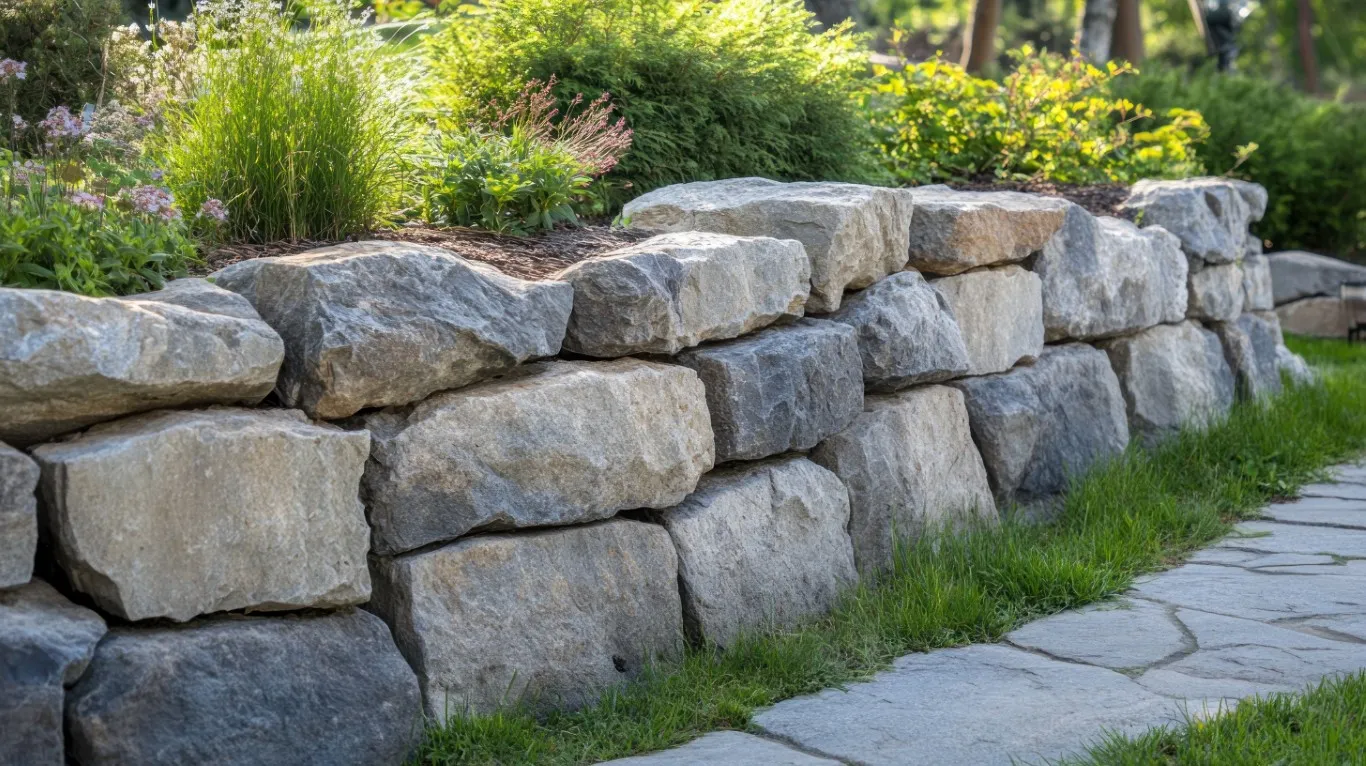
That steep slope in your backyard isn’t just an eyesore. It’s costing you usable outdoor space and potentially damaging your property through erosion. The right retaining wall transforms problem terrain into a functional extension of your home where your family creates lasting memories. Utah Valley homeowners trust professional landscape design services to tackle these challenging projects. Ready to see what’s possible for your yard? Get a free consultation with detailed design options, most responses within 24 hours.
Why Are Retaining Walls Essential for Utah Valley Landscapes?
Retaining walls prevent soil erosion, create level outdoor living spaces on slopes, and manage Utah’s unique drainage challenges from spring snowmelt and summer monsoons.
Living in the foothills of Alpine, Highland, or anywhere along the Wasatch Front means understanding the challenge of sloped terrain. Utah’s geography creates beautiful views but difficult building conditions. The clay-heavy soil common throughout Utah County expands when wet and contracts when dry, making slope stability a year-round concern.
Solving Utah-Specific Terrain Challenges
Spring runoff presents one of the biggest threats to unprotected slopes. As snow melts rapidly in March and April, water rushes downhill, carrying topsoil with it. According to the USDA Natural Resources Conservation Service, unmanaged slopes can lose up to 2 inches of topsoil annually. That soil ends up in your neighbor’s yard, your foundation, or the street.
Retaining walls address this problem by creating barriers that hold soil in place while directing water through proper drainage channels. For foothill properties in Alpine and Highland, where elevation changes can exceed 10 feet across a single lot, tiered retaining walls become necessary infrastructure, not just aesthetic choices.
The Property Value Connection
Well-designed hardscaping projects recoup 50-75% of their cost at resale, according to the National Association of Realtors. More significantly, retaining walls create usable square footage from previously unusable slopes.
A 30-degree slope that once sat barren can become a terraced garden, a level patio, or a safe play area for children. That transformation changes how your family uses your outdoor space every single day.
What Are the Top Retaining Wall Materials for Utah’s Climate?
The best retaining wall materials for Utah homes include concrete block, natural stone, boulders, and treated timber, with concrete and stone offering superior durability through our extreme freeze-thaw cycles.
Utah’s temperature swings from below zero in January to over 100 degrees in July stress building materials in ways that milder climates never experience. Choosing the wrong material means cracks, bulges, and failure within years rather than decades. A 2023 study by the Utah Geological Survey found that improperly installed walls in clay-heavy soils fail at three times the rate of those built to engineering specifications.
Concrete Block Systems
Concrete segmental retaining walls represent the most versatile option for Utah homeowners. Modern systems interlock without mortar, allowing slight movement during freeze-thaw cycles without cracking. These blocks come in various textures mimicking natural stone at lower costs.
For walls under 4 feet, standard concrete blocks work well. Taller walls require engineered blocks with geogrid reinforcement. Quality concrete blocks withstand Utah’s temperature extremes and last 50 years or more with proper installation and drainage.
Natural Stone Walls
Natural stone offers unmatched beauty and works particularly well with Utah’s landscape aesthetic. Locally quarried stone, including Utah limestone and sandstone varieties, matches the surrounding terrain while providing excellent durability.
Stone walls cost more than concrete but require virtually no maintenance once properly constructed. The weight of natural stone provides inherent stability, and the irregular shapes create natural drainage paths. For premium homes in Alpine and Highland, stone walls often deliver the best return on investment through enhanced curb appeal.
Boulder Retaining Walls
Large boulders create dramatic, naturalistic walls that feel native to Utah’s mountain environment. Boulder walls work exceptionally well for informal designs and integrate beautifully with native plantings.
Installation requires heavy equipment and experienced operators. Boulders must be carefully selected and placed to lock together without relying on mortar. When done correctly, boulder walls become permanent landscape features that actually gain character over time.
Treated Timber Walls
Timber walls offer the most budget-friendly option for shorter walls under 3 feet. Modern pressure-treated lumber resists rot and insects effectively. However, even treated timber has a limited lifespan of 15-20 years in Utah’s climate.
Consider timber for temporary solutions or areas where you plan future renovations. For permanent installations, concrete or stone provide better long-term value.
How Do Tiered Retaining Walls Transform Sloped Utah Yards?
Multi-level retaining walls convert steep, unusable slopes into functional terraced spaces perfect for gardens, patios, play areas, and outdoor living zones.
Many Utah Valley lots feature grade changes of 6 to 15 feet or more. A single tall wall to address such slopes creates engineering challenges and often looks imposing. Tiered systems break that height into manageable sections with usable spaces between each level.
Design Approaches for Utah Slopes
The key to effective tiered design lies in spacing. Each terrace should step back far enough to create genuinely usable space, typically 4 to 8 feet minimum. Narrower spacing looks cramped and limits planting options.
For a typical 12-foot elevation change, three walls at 4 feet each with 6-foot terraces between them creates a dramatic transformation. The lower terrace might feature a paver patio perfect for entertaining, the middle level could showcase a perennial garden, and the upper area might provide a quiet seating nook with mountain views.
Drainage Solutions for Tiered Systems
Every terrace needs its own drainage system. Water flowing over the top wall must be captured and directed through each level without causing erosion or saturation. This typically involves gravel backfill behind each wall section, perforated drain pipes at the base of each wall, weep holes spaced every 4 feet along the wall face, and surface drainage swales directing water to collection points.
Skipping proper drainage causes most retaining wall failures. Utah’s clay soil holds water against wall backs, and when that water freezes, it expands with tremendous force. No wall survives repeated hydrostatic pressure from saturated backfill.
Integrating Planting Beds
Terraced walls create perfect conditions for Utah-friendly plantings. Each level offers different sun exposure and moisture conditions. South-facing terraces handle drought-tolerant perennials and ornamental grasses. Shadier north-facing areas support plants that struggle in Utah’s intense afternoon sun.
Consider incorporating drip irrigation into each terrace during wall construction. Running lines after walls are built requires trenching through finished landscapes, adding significant cost and disruption.
How Can You Combine Retaining Walls With Other Outdoor Living Features?
Retaining walls create the level foundation needed for patios, fire pits, pools, sports courts, and other outdoor living features that transform your yard into an extension of your home.
Think of retaining walls as infrastructure that enables everything else. Without level ground, you cannot install a paver patio, build a fire pit area, or create space for children to play safely. Walls do the heavy lifting that makes dream yards possible. According to the American Society of Landscape Architects, 76% of homeowners who add retaining walls also install at least one additional outdoor living feature within two years.
Patio and Entertainment Spaces
A retaining wall with a built-in seating cap creates instant outdoor seating while defining your entertainment area. Walls 18 to 24 inches tall function perfectly as benches when topped with smooth capstones or comfortable cushions.
Position walls to create intimate conversation areas or to shelter patios from prevailing winds. In Utah Valley, afternoon breezes from the west can make outdoor dining uncomfortable. A well-placed wall serves as both decoration and windbreak.
Fire Pit Integration
Fire pits pair naturally with retaining walls. The wall provides seating on one side while defining the fire area. For Utah’s chilly evening temperatures, even in summer, a fire feature extends outdoor living hours significantly.
Built-in fire pits within curved retaining walls create dramatic focal points. The wall’s mass absorbs heat during the fire and radiates warmth back to guests long after flames die down.
Enabling Pools and Sports Courts
Swimming pools and sports courts require perfectly level ground. On sloped lots, retaining walls create the necessary flat pad while managing drainage away from these water-sensitive features.
Walls adjacent to pools must handle splash-out and deck drainage without eroding. Material selection matters here, as concrete and stone withstand moisture far better than timber.
How Much Do Retaining Walls Cost in Utah County?
Retaining walls in Utah County typically cost $25 to $75 per square foot of wall face, depending on height, material choice, drainage requirements, and site accessibility.
Understanding cost factors helps you budget accurately and make informed material decisions. Several variables significantly impact your final investment.
Material Cost Breakdown
Concrete block systems range from $25 to $45 per square foot installed. At the lower end, assume straightforward site access and stable soil conditions; rocky terrain or steep grades push toward the higher end. Natural stone walls cost $45 to $75 per square foot installed, reflecting the premium price of quarried materials and skilled installation. Boulder walls fall between $30 and $55 per square foot installed, depending on stone availability and equipment access. Timber walls are the most affordable at $20 to $35 per square foot installed.
Difficult access requiring hand-carrying materials or rocky soil requiring extensive excavation adds 20-40% to base costs.
Height and Engineering Requirements
Wall height dramatically affects cost. Walls under 4 feet typically require no engineering. Walls 4-6 feet need geogrid reinforcement and may require engineering review. Walls over 6 feet require licensed engineering and often building permits from Utah County.
Engineering adds $1,500-$3,000 to project costs but provides essential documentation for insurance purposes and future home sales. Never skip engineering for tall walls, as the liability exposure far exceeds the professional fees.
Timeline Expectations
Most residential retaining wall projects take 2 to 4 weeks from contract signing to completion. Complex multi-tiered systems may require 6 to 8 weeks. Weather delays occur frequently during Utah’s spring and fall transition seasons.
Ready to get your project started? Request a free, detailed estimate from Utah Valley Landscaping. Most consultations happen within 48 hours, and you’ll receive transparent pricing with no hidden fees. We also offer flexible payment plans to help you start your project sooner.
What Drainage and Engineering Requirements Must Utah Homeowners Know?
Proper drainage systems are non-negotiable for retaining wall longevity, and walls over 4 feet typically require professional engineering to meet Utah building codes.
The National Concrete Masonry Association provides standards that professionals follow for safe wall construction. Understanding these requirements helps you evaluate contractor proposals and avoid substandard work.
Essential Drainage Components
Every properly built retaining wall includes gravel backfill (12 inches minimum of clean, angular gravel behind the wall), filter fabric (separates gravel from native soil to prevent clogging), a perforated drain pipe (4-inch diameter at wall base, sloped to outlet), weep holes (openings through the wall face every 4-6 feet), and surface drainage (directs water away from wall tops).
Skipping any component creates failure points. Water is the enemy of retaining walls, and comprehensive drainage management determines whether your wall lasts 5 years or 50 years.
When Permits Are Required
Utah County requires building permits for retaining walls exceeding 4 feet in height measured from finished grade at the wall base to the top. Walls closer than 2 feet to property lines may have additional setback requirements regardless of height.
Contact your local planning department before beginning construction. Alpine, Highland, and other Utah Valley municipalities may have specific requirements beyond county standards. HOA restrictions often add another layer of approval needed before work begins.
Finding Qualified Engineering
For walls requiring engineering, look for licensed civil or structural engineers familiar with Utah soil conditions. Your landscape contractor should have established relationships with local engineers who understand retaining wall design.
Engineering documents include wall cross-sections, drainage specifications, and geogrid placement if required. These documents become part of the permit application and provide valuable protection if questions arise during home sales.
What Small Yard Retaining Wall Ideas Maximize Limited Space?
Even compact Utah yards benefit from low-profile retaining walls that create defined planting beds, raised seating areas, and visual interest without overwhelming limited square footage.
Not every property needs towering walls. Walls 18 to 36 inches tall solve most residential grade changes while creating opportunities for creative design. Research from Utah State University Extension shows that properly designed small-scale hardscaping can make yards appear up to 30% larger through strategic depth layering.
Space-Saving Design Strategies
Curved walls add visual interest while efficiently managing irregular grade changes. A serpentine wall following natural contours uses less material than a straight wall would require for the same area.
Walls that double as seating eliminate the need for separate benches, freeing floor space. A curved wall around a small patio provides seating for 8-10 people in space that couldn’t accommodate chairs.
Working With HOA Requirements
Many Utah Valley communities have specific guidelines for retaining wall materials and heights. Review your HOA covenants before selecting materials. Some associations require natural stone appearances, while others restrict wall heights in front yards.
Getting HOA approval before construction prevents costly removal orders. Most associations process landscape applications within 2-4 weeks, so factor this timeline into your planning.
Creating Visual Depth
Strategic wall placement makes small yards feel larger. A low wall defining a planting bed creates foreground interest. A mid-height wall further back adds a middle layer. Native plantings against the fence provide background. This layering creates depth perception that expands apparent space.
View our completed project gallery to see how other Utah Valley families have transformed their outdoor spaces with creative retaining wall solutions.
Transform Your Slope Into Your Family’s Favorite Space
The unusable hill in your backyard holds untapped potential. With the right retaining wall design, that slope becomes a terraced garden, an outdoor entertainment area, or a safe play space where your children create memories for years to come.
Utah Valley Landscaping specializes in custom-tailored retaining wall solutions designed specifically for Utah’s unique climate and terrain challenges. Our licensed and insured team handles everything from initial design through final installation, backed by our 1-year warranty on all workmanship.
Ready to get started? Contact Utah Valley Landscaping today for a free estimate. Call us or fill out our quick contact form, and we respond within 24 hours.
Frequently Asked Questions
What is the most durable retaining wall material for Utah’s climate?
Concrete block systems and natural stone are the most durable retaining wall materials for Utah’s extreme climate. These materials withstand the dramatic temperature swings from below zero winters to triple-digit summer heat without cracking or deteriorating. Concrete segmental blocks interlock without mortar, allowing slight movement during freeze-thaw cycles while maintaining structural integrity. Natural stone, particularly locally quarried Utah limestone and sandstone, provides exceptional longevity with virtually no maintenance required. Both materials can last 50 years or more when installed with proper drainage systems.
How tall can a retaining wall be without engineering in Utah?
In Utah, retaining walls under 4 feet in height typically do not require professional engineering or building permits. Walls between 4 and 6 feet need geogrid reinforcement and may require engineering review depending on your municipality. Any wall exceeding 6 feet in height requires licensed engineering and building permits from Utah County. Even for shorter walls, professional engineering provides valuable documentation for insurance purposes and future home sales, so consider it a worthwhile investment for walls approaching the 4-foot threshold.
Do retaining walls need drainage systems in Utah County?
Yes, drainage systems are absolutely essential for retaining walls in Utah County due to the region’s clay-heavy soil and seasonal moisture patterns. Proper drainage includes 12 inches of gravel backfill, filter fabric, a 4-inch perforated drain pipe at the wall base, and weep holes every 4 to 6 feet along the wall face. Utah’s clay soil holds water against wall backs, and when that water freezes during winter, it expands with tremendous force. Walls without comprehensive drainage systems often fail within a few years rather than lasting decades.
How much does a retaining wall cost per foot in Utah Valley?
Retaining walls in Utah Valley typically cost between $25 and $75 per square foot of wall face, depending on the material selected and project complexity. Concrete block systems range from $25 to $45 per square foot installed, while natural stone walls cost $45 to $75 per square foot. Boulder walls fall between $30 and $55 per square foot, and timber walls are the most affordable at $20 to $35 per square foot. Difficult site access, rocky soil conditions, and walls requiring engineering can add 20 to 40 percent to these base costs.
Can I build a retaining wall on a steep slope in Alpine or Highland?
Yes, you can build retaining walls on steep slopes in Alpine and Highland, and tiered wall systems are often the best solution for these challenging foothill properties. Multi-level walls break significant elevation changes into manageable sections with usable terraced spaces between each level. For slopes with elevation changes exceeding 6 to 10 feet, professional engineering becomes essential to ensure structural stability and proper drainage. These projects require heavy equipment, experienced contractors, and careful attention to Utah County building codes and setback requirements.
What is the lifespan of a professionally installed retaining wall?
A professionally installed retaining wall with proper materials and drainage can last 50 years or more in Utah’s climate. Concrete block systems and natural stone walls offer the greatest longevity when built to engineering specifications with comprehensive drainage management. Boulder walls become permanent landscape features that actually gain character over time when correctly installed. Treated timber walls have a shorter lifespan of 15 to 20 years, making them better suited for temporary solutions or areas where future renovations are planned.
Do I need a permit for a retaining wall in Utah County?
Utah County requires building permits for retaining walls exceeding 4 feet in height, measured from finished grade at the wall base to the top of the wall. Walls located closer than 2 feet to property lines may have additional setback requirements regardless of height. Individual municipalities like Alpine, Highland, and other Utah Valley cities may have specific requirements beyond county standards. Additionally, many HOA communities have their own approval processes for landscape projects, so check your covenants and contact your local planning department before beginning construction.