
Your backyard probably looks great at 4pm, but by 8:30 on a warm Utah summer evening, it fades into a flat, dark shape you stop using entirely. The best way to light a Utah backyard is to work in three zones: path and walkway lighting, tree and plant uplighting, and wall and structure lighting. Layering these creates depth and extends your usable evening hours. Learn more on our exterior lighting service page.
Why Does Landscape Lighting Change More Than Just How Your Yard Looks at Night?
Landscape lighting turns an unused evening space into a room you actually live in. Many homeowners doubt outdoor lighting Utah projects will make a real difference, and that doubt is the single biggest reason yards stay dark.
Picture a typical Utah Valley backyard at dusk. There’s a nice paver patio, a few maple trees, maybe a fire pit. At 8pm it all disappears into shadow. Nobody sits out there, and the space you paid for goes to waste half the day.
Now add lighting. The patio glows with a warm, inviting light. Trees are lit from below, throwing texture onto the fence. Path edges are visible, so kids and guests move safely. The same yard becomes an outdoor living space you use long after sunset.
Utah’s summer evenings are the payoff. Days run hot and long, but once the sun drops behind the Wasatch, the temperature turns comfortable. Those evening hours are the best time to be outside, and night landscape lighting is what lets your family actually claim them.
What Are the Three Lighting Zones Every Utah Backyard Needs?
Every well-lit backyard uses three zones: path and walkway lighting for safe movement, tree and plant uplighting for drama and depth, and wall and structure lighting to showcase your hardscape. Layering all three separates a professionally lit yard from a few random stake lights. Lighting designers call this “layering,” and it is the core principle behind every good outdoor lighting plan.
Zone 1: Path and Walkway Lighting
Path lighting for yards guides movement, adds safety, and defines the edges of your space.
- Place fixtures along walkways, patio edges, and near steps to prevent trips in the dark.
- Space them evenly so you get pools of light, not a runway effect.
- Low, downward-facing path lights work best for yards and keep glare out of your eyes.
Zone 2: Tree and Plant Uplighting
Uplighting trees backyard-wide creates the biggest visual drama for the least effort.
- Aim fixtures upward at the base of mature trees common in Utah County neighborhoods, like maples, aspens, and blue spruce.
- Uplighting a canopy throws beautiful shadows onto fences and walls.
- Highlight ornamental grasses or specimen plants to give depth to xeriscaping and native beds.
Zone 3: Wall and Structure Lighting
Wall and structure lighting brings out the hardscape you invested in.
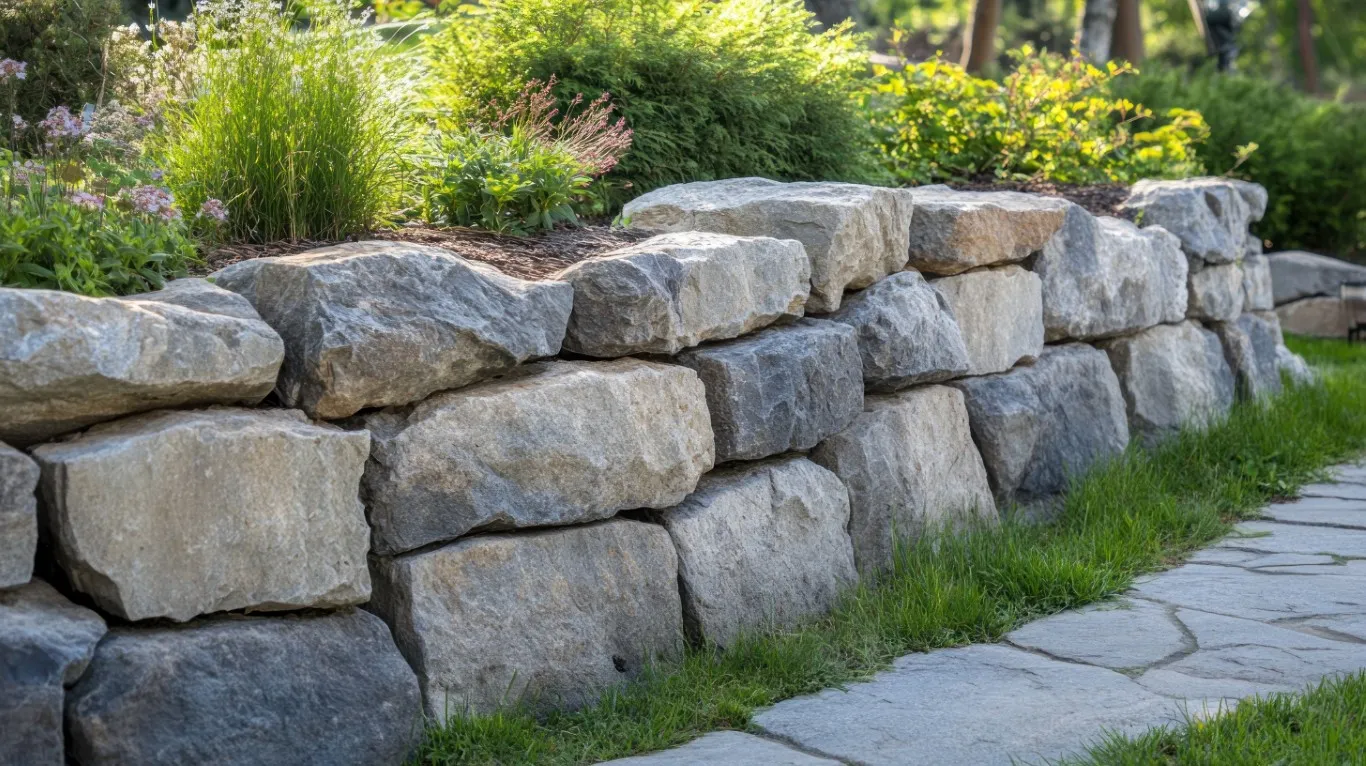
- Wash light across retaining walls, block walls, or stucco to add texture and dimension.
- Light pergolas and pavilions from within to define the space overhead.
- Graze light along a paver patio or hardscape surface to make the material pattern pop after dark.
Warm vs. Cool Light: Which Color Temperature Is Right for Your Yard?
When weighing warm vs cool outdoor lighting for residential backyards, warm white light in the 2700K to 3000K range is the standard choice because it feels inviting and mimics the soft glow of natural evening light. Cool white light, 4000K and above, works for security and task areas but feels harsh and clinical in social spaces.
Here’s the simple version of the Kelvin scale. Lower numbers mean warmer, more golden light, while higher numbers mean cooler, bluer light. Candlelight sits around 1800K, and midday sun is close to 5500K. For a deeper explanation of color temperature standards, the U.S. Department of Energy offers a clear breakdown.
Warm tones matter even more in Utah Valley because of what they land on. Native stone, earthy pavers, tan block walls, and desert-friendly landscaping all read best under warm light. A 2700K glow makes those materials look rich and natural, while cool light drains the color out of them and makes the yard feel like a parking lot.
The practical rule: use warm white everywhere people gather, and reserve cooler light only for a dedicated security fixture or a bright task zone. Consistency across your fixtures makes the whole yard feel intentional instead of patched together. These patio lighting ideas Utah homeowners rely on start with getting the color temperature right.
How Does Landscape Lighting Extend Your Outdoor Evening Use?
A well-lit backyard becomes fully usable after dark, which extends the hours you get out of the space you already built. In Utah, that matters more than most people realize, because the evening is when the yard is actually comfortable.
Utah summer days are long and hot. Nobody wants to sit on an unshaded patio at 3pm in July. After sunset, though, the temperature drops and the yard becomes the best room in the house. Exterior lighting Utah homes rely on keeps it open for business.
Think about where your family actually spends time and light those zones:
- Around seating areas and the patio, so conversation continues after dark.
- Near the fire pit, where evenings naturally stretch long.
- Along a sports court or in-ground trampoline, so kids can keep playing after dinner.
Lighting connects to something bigger than looks. Evening gatherings, s’mores by the fire, and kids running around after the sun goes down are memories a dark yard never lets you make. Good lighting also improves visibility around your home’s exterior at night, a real bonus for curb appeal and peace of mind.
What Lighting Ideas Work Especially Well in Utah Backyards?
The backyard lighting ideas Utah homeowners respond to most play to the region’s mature trees, terraced lots, and hardscape-heavy designs. Here are five that Utah Valley homeowners recognize instantly:
- Uplight your mature trees. Established neighborhoods in Orem, Provo, and American Fork are full of large maples and spruce. A single uplight at the base transforms one into a nighttime centerpiece.
- Add step and riser lighting on terraced patios. Many Utah Valley lots sit on slopes and hillsides. Recessed lights in paver steps and retaining wall risers keep everyone safe and look sleek.
- String lights over the outdoor dining area. Warm bistro-style strings above a patio table create instant atmosphere for family dinners and summer gatherings.
- Use in-ground lighting around sports courts and trampolines. Flush in-ground fixtures let kids keep playing after dark without a harsh floodlight glaring into the neighbor’s window. Following the International Dark-Sky Association guidance on shielded, downward-directed fixtures keeps glare and light pollution in check.
- Try silhouette lighting against stucco or block walls. Place a plant or sculptural element in front of a lit wall to cast a dramatic shadow. A simple trick that reads as high-end design.
For even more inspiration, our guide on enhancing your Utah backyard with landscape lighting walks through additional real-world examples of landscape lighting installation Utah Valley yards benefit from.
Before and After: What Does a Lit Utah Valley Backyard Actually Look Like?
The best proof that lighting is worth it comes from seeing the same yard before and after. Picture a typical Lehi backyard with a paver patio, a couple of maples, and a low retaining wall. Beautiful during the day, but after dark it’s a flat black rectangle. The family drifts back inside by 8:30 because there’s nothing to see and nowhere comfortable to sit.
Now light it. Warm 2700K fixtures wash the patio in a soft glow. Two maples are uplit, throwing texture across the fence. Recessed lights trace the retaining wall steps, and low path lights define the walkway edges. Suddenly there’s depth, warmth, and defined zones. The family stays out past 10, and the yard becomes the space they actually wanted all along.
Every yard is different, which is exactly why placement is planned for your specific space rather than copied from a template. Contact Utah Valley Landscaping at (801) 899-9199 or request a free consultation to see what your backyard could look like after dark.
How Does Working With a Local Lighting Installer Work?
Working with a professional installer removes the guesswork and the trial-and-error of a DIY lighting project. The process is straightforward, and knowing the steps ahead of time makes the decision easier.
Here’s what to expect:
- Site walkthrough and zone planning. We walk your yard and map out the path, tree, and wall zones based on how your family actually uses the space. This professional walkthrough is where a custom-tailored design takes shape, since fixture placement is planned per yard rather than pulled from a template.
- Fixture selection. Fixtures and color temperature are chosen to match your hardscape, plants, and design goals.
- Wiring and placement. Conduit and low-voltage wiring are run cleanly and safely, with fixtures positioned per your custom plan.
- Final nighttime walkthrough. We return after dark to fine-tune angles and brightness, because a fixture that looks right in daylight often needs adjusting once the sun is down.
Utah’s climate factors into every step. Freeze-thaw cycles are hard on cheap fixtures and shallow wiring, so we select weather-rated equipment and install with our local conditions in mind, from winter freeze-thaw stress to warm summer evening use. All work is licensed and insured and backed by a 1-year warranty on our work, so you can move forward with confidence. If you’re pairing lighting with a bigger project, our landscape design services tie the whole outdoor living space together.
Ready to see your backyard come alive after dark? Contact Utah Valley Landscaping at (801) 899-9199 or reach out through our contact page to talk through your project and request an estimate. We provide outdoor lighting Utah County service to Lehi, American Fork, Orem, Provo, and communities across the valley, and we would love to help you create more evening memories in your own dream yard.
Frequently Asked Questions
What type of landscape lighting works best for Utah backyards?
Low-voltage, weather-rated fixtures work best for Utah backyards because they hold up to the region’s freeze-thaw cycles and hot summers. The most effective setups combine three types of lighting: path lights for walkways, uplights for mature trees, and wall wash or grazing lights for hardscape. This layered approach creates depth and highlights the stone, pavers, and native plants common in Utah Valley yards. Sticking with quality fixtures rated for outdoor conditions ensures your lighting lasts through years of Utah weather.
How many lighting zones does a typical backyard need?
Most backyards need three core lighting zones to feel complete: path and walkway lighting, tree and plant uplighting, and wall and structure lighting. Each zone serves a different purpose, from safe movement to visual drama to showcasing your hardscape. Layering all three is what separates a professionally designed yard from a handful of scattered stake lights. Larger or terraced lots may benefit from additional zones, such as step lighting or dedicated task areas, but three is the foundation.
What is the best color temperature for outdoor landscape lighting?
Warm white light in the 2700K to 3000K range is the best choice for outdoor landscape lighting because it feels inviting and mimics the soft glow of natural evening light. This warm tone makes native stone, pavers, tan block walls, and desert-friendly plants look rich and natural. Cooler light at 4000K and above tends to feel harsh and can drain the color from your materials, making the yard look clinical. Reserve cooler temperatures only for dedicated security fixtures or bright task areas.
Does landscape lighting add value to a home in Utah?
Yes, landscape lighting adds value by improving curb appeal and expanding the usable living space of a home. A well-lit yard makes a strong first impression at night and signals that the property has been thoughtfully maintained. It also turns an unused evening space into an outdoor room the family actually uses, which is a meaningful selling point in Utah where summer evenings are prime outdoor time. Improved nighttime visibility around the home is an added bonus for both safety and appeal.
How long does landscape lighting installation take?
Most residential landscape lighting projects can be completed in one to a few days, depending on the size of the yard and the number of zones involved. The process includes a site walkthrough and zone planning, fixture selection, wiring and placement, and a final nighttime walkthrough to fine-tune the results. Larger properties, terraced lots, or projects paired with other landscaping work may take longer. A professional installer can give you a clearer timeline after seeing your specific space.
Can landscape lighting work through Utah winters?
Yes, landscape lighting works reliably through Utah winters when the right equipment is used and installed correctly. Freeze-thaw cycles are hard on cheap fixtures and shallow wiring, so weather-rated equipment installed with local conditions in mind is essential. LED fixtures perform well in cold temperatures and use very little energy, which keeps operating costs low year-round. Properly buried low-voltage wiring and quality fixtures ensure your lighting continues to perform through snow and freezing temperatures.
Where should path lights be placed in a backyard?
Path lights should be placed along walkways, patio edges, and near steps to guide movement and prevent trips in the dark. Space them evenly so you create soft, overlapping pools of light rather than a harsh runway effect. Choose low, downward-facing fixtures to keep glare out of your eyes while still illuminating the ground clearly. Focusing on the areas where people actually walk ensures both safety and a polished, intentional look.
{“meta_title”:”Utah Backyard Lighting Ideas: Zone-by-Zone Guide for 2026″,”meta_description”:”Discover zone-by-zone landscape lighting ideas for your Utah backyard, from path lights to tree uplighting. See what a lit yard looks like and get a free estimate.”}