

Your backyard is rotting under your feet, and every spring brings the same frustrating cycle of sanding, staining, and splinter removal. Deck pavers in Utah offer homeowners a durable, low-maintenance alternative that withstands temperature swings from -10°F to 100°F while creating a safe surface for barefoot kids and outdoor gatherings. Utah Valley Landscaping specializes in custom paver installations that transform ordinary backyards into stunning outdoor living spaces. Ready to see what’s possible for your home? Get a free design consultation with no pressure and no obligation.
What Are Deck Pavers and Why Are They Perfect for Utah Homes?
Deck pavers are interlocking stone, concrete, or porcelain units installed on a compacted base to create flat outdoor surfaces that function like traditional decks but offer superior durability and design flexibility. Unlike wood decking that sits elevated on joists, paver decks rest directly on prepared ground or raised pedestal systems, making them ideal for patios, pool surrounds, and multi-level outdoor living areas.
Utah’s climate creates unique challenges that make paver decks particularly smart investments. The Wasatch Front experiences over 100 freeze-thaw cycles annually, according to Utah State University Extension data. Each cycle causes wood to expand, contract, crack, and eventually fail. Quality pavers, by contrast, are engineered to handle these temperature extremes without structural damage.
Climate Durability That Wood Simply Cannot Match
Utah Valley homeowners deal with temperature swings that would destroy most building materials. Summer afternoons regularly exceed 95°F, while winter nights plunge below zero. This 100+ degree annual range wreaks havoc on wood decks, causing boards to cup, warp, and pull away from fasteners.
Concrete and natural stone pavers absorb these temperature changes without structural compromise. Their density and composition allow for microscopic expansion without cracking. When properly installed with appropriate joint spacing, paver decks maintain their integrity for 25 to 50 years, compared to 10 to 15 years for pressure-treated wood decks in Utah’s climate.
Family-Friendly Surfaces That Prioritize Safety
Every parent knows the frustration of splinter removal after backyard playtime. Wood decks deteriorate over time, creating rough surfaces, raised nail heads, and splintering boards that make barefoot play risky. Paver decks eliminate these hazards entirely.
Modern pavers feature textured surfaces that provide excellent traction when wet while remaining comfortable for bare feet. Your kids can run from the trampoline to the pool without you worrying about injuries. Less time treating scrapes means more time creating memories as a family.
Which Paver Deck Materials Work Best in Utah’s Climate?
Choosing the right material makes all the difference in Utah. Not every paver performs equally well at our elevation of 4,500 feet or higher, where UV exposure intensifies and winter conditions test every outdoor surface. Concrete pavers lead in popularity due to their balance of durability, cost, and design options.
Concrete Pavers: The Reliable Workhorse
Concrete pavers remain the most popular choice for Utah homeowners, and for good reason. Modern concrete pavers achieve compressive strength ratings of 8,000+ PSI, well above the 3,000 PSI minimum recommended by the Interlocking Concrete Pavement Institute for residential applications.
Benefits for Utah homes:
- Color options range from subtle earth tones to bold contemporary shades
- Textured finishes prevent heat absorption better than smooth surfaces
- Cost-effective at $3 to $8 per square foot for materials
- Available in dozens of shapes for custom patterns
Considerations:
- Surface color may fade slightly over 10 to 15 years with intense UV exposure
- Requires periodic sealing every 3 to 5 years for optimal appearance
- Lower-quality concrete pavers may crack during severe freeze-thaw cycles
Natural Stone Pavers: Timeless Elegance
Natural stone offers unmatched beauty and longevity. Flagstone, bluestone, travertine, and slate all perform well in Utah when properly selected and installed.
Best choices for Utah Valley:
- Flagstone: Local Utah sandstone and quartzite options integrate naturally with mountain surroundings
- Travertine: Excellent heat reflection keeps surfaces cooler in summer
- Bluestone: Dense composition handles freeze-thaw with minimal absorption
Investment level:
Natural stone pavers typically cost $10 to $30 per square foot for materials, but their 50+ year lifespan makes the per-year cost comparable to concrete options. Many Highland and Alpine homeowners choose natural stone for its ability to complement high-end architecture.
Porcelain Pavers: The Modern Performance Leader
Porcelain pavers represent the newest technology in outdoor surfacing. With water absorption rates below 0.5%, they’re virtually impervious to freeze-thaw damage, a critical advantage for Utah installations.
Performance advantages:
- Stain-resistant surface requires minimal maintenance
- Won’t fade under intense UV exposure
- Available in wood-look patterns that mimic traditional decking
- Slip-resistant textures exceed ADA requirements
Practical considerations:
- Higher initial cost at $8 to $15 per square foot for materials
- Requires professional installation with specialized techniques
- Limited local inventory may extend project timelines
What Paver Deck Designs Work Best for Utah Valley Backyards?
The best paver deck design reflects your family’s lifestyle, not someone else’s generic vision. Utah Valley’s architectural diversity, from modern Lehi developments to established Alpine estates, calls for custom designs that complement existing homes while maximizing outdoor living potential. According to the American Society of Landscape Architects, 97% of members report that outdoor living spaces are the most requested residential feature.
Modern Geometric Patterns
Clean lines and large-format pavers create contemporary outdoor spaces that pair beautifully with Utah’s modern farmhouse and transitional home styles. Consider 24×24 inch concrete or porcelain pavers in charcoal or warm gray tones, laid in simple grid patterns with narrow joints.
This aesthetic works particularly well for Vineyard and Pleasant Grove homes built within the last decade. The streamlined look extends interior design sensibilities outdoors, creating seamless transitions from kitchen to patio.
Rustic Mountain Integration
Utah’s mountain backdrop calls for materials that honor the natural landscape. Local flagstone and quartzite in warm browns, rust tones, and subtle reds create paver decks that feel rooted in place rather than imposed upon it.
Irregular shapes and organic laying patterns complement craftsman and mountain contemporary architecture common throughout Alpine, Highland, and Cedar Hills. Many homeowners integrate native plantings between paver sections, creating softscape connections that blur the line between built and natural environments.
Pool Deck Integration
Paver decks excel around pools, and for good reason. Unlike poured concrete that can crack and separate, pavers allow water to drain between joints while maintaining structural integrity. For families with custom pools, paver surrounds create safe, attractive surfaces that enhance the entire backyard experience.
Travertine and tumbled concrete pavers remain popular pool deck choices in Utah County. Their textured surfaces provide excellent grip when wet, while lighter colors reflect heat rather than absorbing it, keeping surfaces comfortable for bare feet even during July afternoons.
Multi-Level Outdoor Living
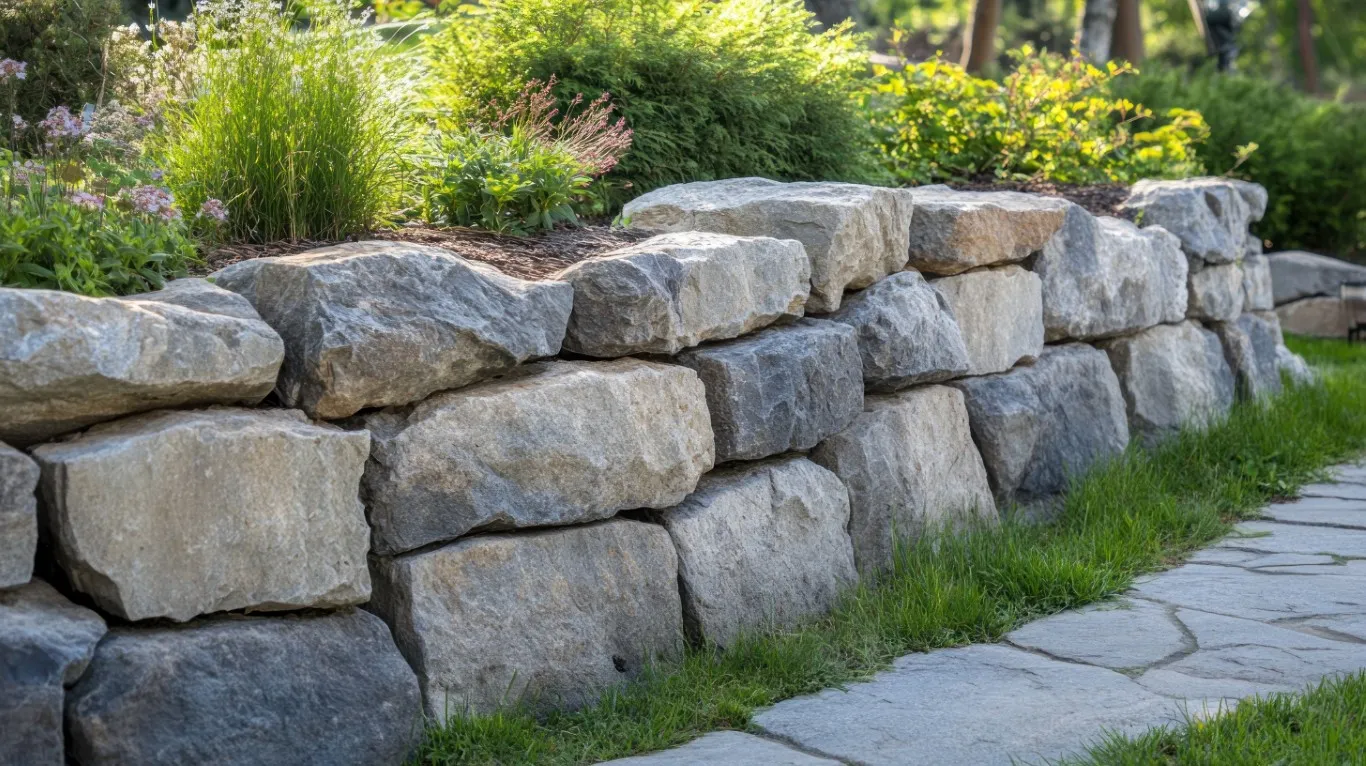
Utah Valley’s hilly terrain often creates challenging grade changes that traditional wood decks address awkwardly. Paver decks, combined with retaining walls and integrated steps, transform slopes into usable outdoor living spaces with distinct zones for dining, lounging, and play.
How Do Paver Decks Compare to Traditional Wood Decks in Utah?
Paver decks outperform wood decks in Utah’s climate on nearly every practical measure, from durability and maintenance to long-term cost and safety. With the average Utah homeowner spending $300 to $600 annually on wood deck maintenance, the comparison favors pavers significantly over time.
Durability in Utah’s Extreme Conditions
Freeze-thaw resistance:
- Pavers: Engineered for 100+ annual cycles without damage
- Wood: Expands and contracts, causing warping and fastener failure
UV exposure at elevation:
- Pavers: Minimal fading over decades
- Wood: Requires staining every 1 to 2 years to prevent graying
Expected lifespan in Utah:
- Pavers: 25 to 50 years with proper installation
- Wood: 10 to 15 years before major repairs or replacement
Pest resistance:
- Pavers: Zero risk of termite or carpenter ant damage
- Wood: Requires chemical treatment and ongoing inspection
Maintenance Requirements
Utah’s dry climate accelerates wood deterioration. The combination of low humidity, intense UV, and temperature extremes means wood decks demand constant attention.
Annual wood deck maintenance in Utah:
- Power washing and inspection each spring
- Stain or sealant application every 1 to 2 years
- Board replacement as splitting occurs
- Fastener inspection and tightening
- Estimated annual cost: $200 to $500 in materials and 8 to 12 hours of labor
Annual paver deck maintenance in Utah:
- Light pressure washing once yearly
- Joint sand replacement every 3 to 5 years
- Sealer application every 3 to 5 years for premium appearance
- Estimated annual cost: $50 to $150 in materials and 2 to 4 hours of labor
Long-Term Cost Analysis
Initial installation costs favor wood decks, but lifetime ownership costs tell a different story.
Typical Utah installation costs per square foot:
- Pressure-treated wood deck: $15 to $25 installed
- Composite wood deck: $25 to $40 installed
- Concrete paver deck: $18 to $35 installed
- Natural stone paver deck: $30 to $50 installed
20-year ownership costs for 400 square foot deck:
- Wood deck: $6,000 initial + $8,000 maintenance + $6,000 replacement = $20,000
- Paver deck: $10,000 initial + $2,000 maintenance + $0 replacement = $12,000
Ready to see exact pricing for your project? Get a free estimate from Utah Valley Landscaping in less than 48 hours, with transparent costs and no hidden fees.
How Does the Paver Deck Installation Process Work?
Professional paver deck installation in Utah Valley typically takes 2 to 4 weeks from groundbreaking to completion. Understanding each phase helps you plan your project around family activities and seasonal considerations.
Design Consultation and Site Assessment
Every custom paver deck begins with understanding your family’s needs. Your designer will evaluate existing grade and drainage patterns, soil conditions specific to your Utah County location, access for equipment and material delivery, utility locations and setback requirements, and your aesthetic preferences and functional priorities.
This phase takes 1 to 2 weeks, including site measurement and initial design concepts. Utah Valley Landscaping provides 3D renderings so you can visualize the finished project before any work begins.
Permitting and Preparation
Utah County municipalities vary in their permit requirements for paver installations. Most residential paver decks under 200 square feet don’t require permits, but larger projects, elevated installations, or work near property lines typically do. Your contractor handles permit applications and ensures compliance with local codes. Expect 1 to 3 weeks for permit approval in most Utah Valley cities. During this time, material ordering occurs to ensure everything arrives when needed.
Site Preparation and Base Installation
Proper base preparation determines paver deck longevity. This phase involves excavation to appropriate depth (typically 6 to 8 inches for pedestrian use), grading for proper drainage away from structures, compaction of native soil with mechanical equipment, installation of geotextile fabric to prevent base migration, placement and compaction of crushed aggregate base in lifts, and final grading with bedding sand layer.
In Utah’s clay-heavy soils common throughout Provo, Orem, and American Fork, this phase requires particular attention. Insufficient base preparation causes settling and shifting that leads to uneven surfaces and drainage problems.
Paver Installation and Finishing
With base preparation complete, paver installation proceeds relatively quickly. Experienced crews can install 100 to 200 square feet daily depending on pattern complexity and site conditions. Installation includes string line layout for straight edges and proper alignment, careful paver placement following planned pattern, cutting border pavers with wet saws for clean edges, mechanical compaction to set pavers into bedding sand, polymeric sand application to fill joints, and final compaction and cleaning.
Final Details and Walkthrough
Professional installation concludes with integration of lighting if included in design, landscape restoration around work areas, final cleaning and inspection, client walkthrough to verify satisfaction, and documentation of warranty coverage. Most paver deck projects in Utah Valley complete within 2 to 4 weeks from groundbreaking. Utah Valley Landscaping’s process includes detailed scheduling so you know exactly when each phase occurs.
How Much Do Deck Pavers Cost in Utah Valley?
Paver deck installation in Utah County ranges from $18 to $50 per square foot, depending on material selection, project complexity, and site conditions. A typical 400 square foot paver deck costs between $7,200 and $20,000 installed, with most homeowners investing $10,000 to $14,000 for quality concrete pavers with professional installation.
Material Cost Breakdown
Basic concrete pavers:
- Materials: $3 to $8 per square foot
- Installation: $10 to $15 per square foot
- Total installed: $13 to $23 per square foot
Premium concrete pavers:
- Materials: $6 to $12 per square foot
- Installation: $12 to $18 per square foot
- Total installed: $18 to $30 per square foot
Natural stone pavers:
- Materials: $10 to $30 per square foot
- Installation: $15 to $25 per square foot
- Total installed: $25 to $55 per square foot
Porcelain pavers:
- Materials: $8 to $15 per square foot
- Installation: $15 to $22 per square foot
- Total installed: $23 to $37 per square foot
Factors That Affect Your Quote
Site access: Projects requiring hand-carrying materials significant distances add $2 to $5 per square foot. Utah Valley homes on hillsides or with limited backyard access often encounter this premium.
Existing conditions: Removing old concrete or addressing drainage issues increases project costs by $3 to $8 per square foot. Properties with significant grade changes require additional base material and labor.
Pattern complexity: Herringbone, circular, and multi-color patterns require more cutting, waste, and installation time. Expect 15% to 25% higher costs for complex designs versus simple running bond patterns.
Return on Investment
According to the National Association of Realtors’ 2023 Remodeling Impact Report, outdoor living improvements return approximately 75% of costs at resale while providing immediate quality-of-life benefits. In competitive Utah real estate markets, well-designed outdoor spaces frequently differentiate properties and accelerate sales.
Most Utah Valley homeowners find paver decks pay for themselves through eliminated maintenance costs within 8 to 12 years, with decades of additional use remaining. Request your free, itemized quote today by calling Utah Valley Landscaping or completing our online form. We’ll provide detailed pricing within 48 hours, including material options at three budget levels.
How Should You Maintain Your Paver Deck Through Utah’s Seasons?
Paver decks require roughly 80% less maintenance than wood decks, but Utah’s seasons still call for specific care at key times throughout the year. Following this schedule keeps your investment looking beautiful for decades.
Spring Renewal (March through April)
Winter leaves debris, salt residue, and organic material on paver surfaces. Spring maintenance includes removing accumulated debris with leaf blower or broom, light pressure washing at 1,500 to 2,000 PSI maximum, inspecting for any shifted pavers and resetting as needed, and checking joint sand levels and adding polymeric sand to low spots.
Summer Protection (May through August)
Utah’s intense summer sun and low humidity create ideal conditions for paver enjoyment with minimal concerns. Spot clean spills and stains promptly, apply sealer every 3 to 5 years if desired (choosing products rated for UV exposure), and arrange furniture periodically to prevent compression marks.
Fall Preparation (September through October)
Before winter arrives, clear all organic debris that can trap moisture, ensure drainage paths remain clear, apply fresh polymeric sand if joints appear low, and consider sealer application if due.
Winter Management (November through February)
Paver decks handle Utah winters beautifully with minimal intervention. Use plastic snow shovels rather than metal, avoid ice melt products containing calcium chloride (which can damage some pavers), and use magnesium chloride products which work safely on most paver types. Allow snow to melt naturally when temperatures permit.
Compare this minimal effort to the extensive maintenance wood decks demand, including snow removal precautions, ice damage inspection, and spring staining. The time savings alone make paver decks attractive for busy Utah families who want to spend weekends enjoying their backyards rather than maintaining them.
Ready to get started? Contact Utah Valley Landscaping today for a free estimate. Call us or fill out our quick contact form and we respond within 24 hours.
Frequently Asked Questions
Do paver decks hold up to Utah’s freeze-thaw cycles?
Yes, quality paver decks are specifically engineered to withstand Utah’s demanding freeze-thaw conditions. The Wasatch Front experiences over 100 freeze-thaw cycles annually, and pavers handle this stress through their dense composition and proper joint spacing that allows for microscopic expansion. Unlike wood that warps and cracks under these conditions, concrete and natural stone pavers maintain their structural integrity cycle after cycle. When installed with appropriate base preparation and polymeric sand joints, paver decks perform reliably for decades through Utah’s temperature extremes.
How long do deck pavers last in Utah’s climate?
Deck pavers typically last 25 to 50 years in Utah’s climate when properly installed, compared to just 10 to 15 years for pressure-treated wood decks. Natural stone pavers often exceed 50 years of service life with minimal maintenance. The key factors affecting longevity include quality base preparation, proper drainage, and selecting pavers rated for freeze-thaw resistance. Porcelain pavers with water absorption rates below 0.5% offer the best protection against freeze-thaw damage and can last a lifetime with basic care.
Can I install a paver deck around my existing pool?
Absolutely, paver decks are an excellent choice for pool surrounds and can be installed around existing pools without major disruption. Pavers offer superior drainage compared to poured concrete since water flows between the joints rather than pooling on the surface. Travertine and tumbled concrete pavers are particularly popular for Utah pool decks because their textured surfaces provide excellent grip when wet. A professional installer can integrate new pavers seamlessly with your existing pool coping and surrounding landscape elements.
What’s the best paver material for hot Utah summers?
Travertine and lighter-colored concrete pavers perform best during Utah’s hot summers because they reflect heat rather than absorbing it. Porcelain pavers also stay cooler underfoot due to their dense composition and low heat retention. Avoid dark-colored pavers in areas where your family walks barefoot, as these can become uncomfortably hot during July and August afternoons. Textured finishes on any material help reduce surface temperature compared to smooth finishes by creating micro-shadows across the surface.
Do I need a permit for a paver deck in Utah County?
Permit requirements vary by municipality throughout Utah County, but most residential paver decks under 200 square feet do not require permits. Larger projects, elevated installations using pedestal systems, or work near property lines typically do require permits and inspections. Projects involving electrical work for lighting or significant grading changes will also trigger permit requirements. Your contractor should handle permit applications and ensure compliance with local building codes for your specific city.
How do paver decks compare to traditional wood decks in cost?
Paver decks cost slightly more upfront than basic wood decks, with concrete pavers running $18 to $35 per square foot installed compared to $15 to $25 for pressure-treated wood. However, the 20-year ownership cost tells a different story. A 400 square foot wood deck typically costs around $20,000 over 20 years when you factor in maintenance and replacement, while a comparable paver deck costs approximately $12,000 total. The reduced maintenance burden and eliminated replacement costs make pavers the more economical long-term choice for Utah homeowners.
Can paver decks be installed year-round in Utah?
Paver decks can be installed during most of the year in Utah, though late spring through early fall offers the most favorable conditions. Winter installations are possible but may face delays due to frozen ground, which makes excavation and compaction more difficult. Polymeric sand used to fill paver joints requires temperatures above 40 degrees Fahrenheit for proper curing. Most Utah Valley contractors schedule installations from April through November to ensure optimal conditions for base preparation and finishing work.