

A poorly planned xeriscape can look like an empty gravel lot, and that eyesore can drag down your whole property and your enjoyment of it. The difference between a barren yard and a curated desert garden is design, not just plant choice. Great xeriscape design in Utah comes down to zoning your yard by water need, layering textures and heights, and integrating hardscape so the space feels intentional. If you want a professional eye on your plan, the team behind Utah Valley Landscaping’s design and installation services can help.
Why Does Xeriscape Design Matter More Than the Plant List?
A xeriscape looks polished or barren based on layout, layering, and hardscape integration, not the plant list alone. Design is what separates a curated water-wise garden from a sparse gravel field.
Most homeowners planning low water backyard design in Utah start by hunting for a list of drought-tolerant plants. That is the wrong starting point. A pile of the right plants dropped into flat gravel with no structure still reads as neglected.
Xeriscape is a design discipline. Planning around sightlines, plant heights, seasonal color rotation, and the way stone and pathways frame planting beds is what pays off. When those elements work together, the result feels deliberate and rich.
Utah Valley has its own design fingerprint too. At an elevation of roughly 4,500 to 5,000 feet, with alkaline soils and a USDA Zone 5b to 6a rating, the plants and layouts that thrive here differ from what national sites recommend for Arizona or Nevada.
Utah Valley Landscaping has designed xeriscape installations across Utah County, including Alpine and Highland, where HOA expectations and soil conditions shape every plan. Local experience matters. Xeriscaping has a reputation for looking identical from yard to yard, and a custom-tailored design is exactly what breaks that pattern. If you want a refresher on the fundamentals first, this guide to xeriscaping in Utah covers the basics.
What Is Hydrozoning and How Do You Zone a Yard by Water Need?
Hydrozoning means grouping plants by water requirement into distinct zones so irrigation runs efficiently and the yard looks organized rather than scattered. It is the backbone of every good xeriscape layout.
Hydrozoning is the single most important concept in water wise landscaping Utah homeowners can apply. Instead of scattering plants randomly, you cluster them by thirst. High water plants go in one small zone, moderate water plants in another, and low water natives fill the largest area.
This hydrozoning landscape design approach does two things at once. Your irrigation delivers the right amount of water to each area without drowning the drought-tolerant plants or starving the thirstier ones. You also gain visual coherence, because plants with similar needs often share a similar look and rhythm.
A typical Utah Valley hydrozoning layout breaks down into three zones:
- High-water zone: A small accent area near a patio or entry, often with a few flowering perennials or a container garden. Keep this compact.
- Moderate-water zone: Transitional plantings like ornamental grasses and hardy shrubs that get occasional deep watering.
- Low-water zone: The bulk of the yard, filled with Utah native plants and rock garden landscaping that survives on minimal supplemental irrigation once established.
One honest note on establishment. Xeriscape reduces water use significantly, but it does not eliminate it. New plantings typically need consistent irrigation through their first one to two growing seasons to root deeply. After that, low-water zones lean heavily on Utah’s natural precipitation.
Local water conservation programs reward this kind of planning. Municipalities including Lehi, Eagle Mountain, and Provo have offered water-wise landscaping incentives at various times. Program terms change often, so verify current details directly with your city before you count on a rebate. For a regional overview of water-wise practices, Utah State University Extension’s water conservation resources are a reliable starting point. Once your zones are mapped, the next decision is what you put on the ground between the plants.
Which Ground Cover and Mulch Options Hold Moisture Best in Utah?
The best ground cover choices for Utah xeriscapes are decomposed granite, river rock, bark mulch, and living ground covers, each with tradeoffs in appearance, moisture retention, and maintenance. The right pick depends on the zone and the look you want.
Ground cover is not filler. It defines the entire aesthetic of a desert landscaping design in Utah, controls weeds, and helps the soil hold moisture. Choosing well is half the battle.
Here is how the main options compare for Utah conditions:
- Decomposed granite: A compact, fine gravel that creates clean pathways and a modern desert look. It drains well and suits Utah’s alkaline soils. Over time it can migrate, so edging helps keep it contained.
- River rock: Larger, rounded stones that add texture and work beautifully in dry creek beds and rock garden landscaping Utah yards handle well. River rock holds heat, so keep it away from plants that dislike hot roots. Local and regional stone yards carry Utah-appropriate options that blend with the surrounding foothills.
- Bark mulch: An organic option that retains soil moisture better than rock and moderates soil temperature. It breaks down over time and needs periodic replenishment, but plants often establish faster under it. Great for the moderate-water zone.
- Living ground covers: Low, spreading plants that green up bare areas without much water. These soften a design and prevent the sterile gravel-lot look that gives xeriscape a bad name.
For Utah Valley, a blend usually wins. Many well-designed yards use decomposed granite or river rock in the low-water zones for structure and durability, then switch to bark mulch around perennials and shrubs where moisture retention matters most.
Weigh one tradeoff carefully: rock is permanent and low-maintenance but radiates heat and can bake nearby roots in July. Bark is cooler and kinder to plants but requires upkeep. A thoughtful design mixes both based on what each zone needs. Good ground cover sets the stage, and the plants are what bring it to life.
What Are the Best Utah-Adapted Plants for Color and Year-Round Interest?
The best xeriscape plants for Utah Valley are cold-hardy, alkaline-tolerant species rated for Zone 5b to 6a, including ornamental grasses, native shrubs, and flowering perennials that deliver color across the seasons. Layering these creates depth and year-round interest.
The fear with drought tolerant landscaping ideas Utah homeowners share is a yard that looks brown and lifeless. The fix is choosing plants with distinct textures, bloom times, and heights, then layering them so something always draws the eye.
Match every plant to Utah’s specific conditions. Check two markers: cold-hardiness for our Zone 5b/6a winters and tolerance for alkaline soil, which is common across Utah County. For species selection guidance, the USDA’s Plant Hardiness Zone Map confirms your local zone before you buy.
Ornamental Grasses for Movement and Structure
Ornamental grasses give a xeriscape motion and a soft vertical line. Blue fescue offers compact blue-gray mounds that hold color into fall. Little bluestem, a native prairie grass, turns coppery red in autumn and handles alkaline soil well. Feather reed grass adds a taller upright accent that reads well against boulders.
Flowering Perennials for Seasonal Color
Perennials rotate the color through the year so the yard never goes flat. Strong Utah performers include:
- Penstemon: Many varieties are Utah natives, thriving in dry, alkaline soil and drawing hummingbirds.
- Russian sage: Silvery foliage and long-lasting purple-blue blooms that tolerate heat and poor soil.
- Yarrow: Tough, flat-topped flower clusters in white, yellow, and pink that bloom through summer.
- Blanket flower: Warm red-and-yellow daisies that flower for months with little water once established.
Native Shrubs for Backbone and Winter Interest
Shrubs anchor the design and provide structure when perennials die back. Rabbitbrush produces gold fall blooms and silvery foliage that pairs naturally with the Wasatch foothills. Serviceberry offers spring flowers, edible fruit, and fall color. Sagebrush brings that classic Great Basin scent and evergreen texture through winter.
For deeper reading on species that hold up long-term, this guide to native Utah plants and low-maintenance design is a useful companion for anyone planning Utah native plants landscaping.
Smart xeriscape plant combinations Utah yards reward are the trick. Pair the blue-gray of fescue with the purple of Russian sage and the copper of little bluestem, and you get contrast that carries through the seasons. Layer tall grasses behind mid-height perennials in front of a low native ground cover, and even a low-water bed feels full.
Site drainage, sun exposure, and soil variation all play a role in how plants perform. Choosing Zone-appropriate, alkaline-tolerant species stacks the odds heavily in your favor.
How Do You Combine Hardscape and Xeriscape With Patios, Boulders, and Pathways?
Integrating patios, pavers, natural stone, and boulders into a xeriscape adds structure, creates usable outdoor living space, and reduces the planted area that needs ongoing water and care. Hardscape is what turns a plant collection into a designed yard.
Hardscape is the framework a xeriscape hangs on. Without it, even beautiful plantings can feel aimless. With it, the yard gains rooms, pathways, and gathering spots that invite your family outside.
Start with the functional core. A paver or concrete patio gives you a place to sit, grill, and gather, and it needs zero irrigation. Pathways of decomposed granite or flagstone route foot traffic and divide planting zones so the design reads as organized rather than random.
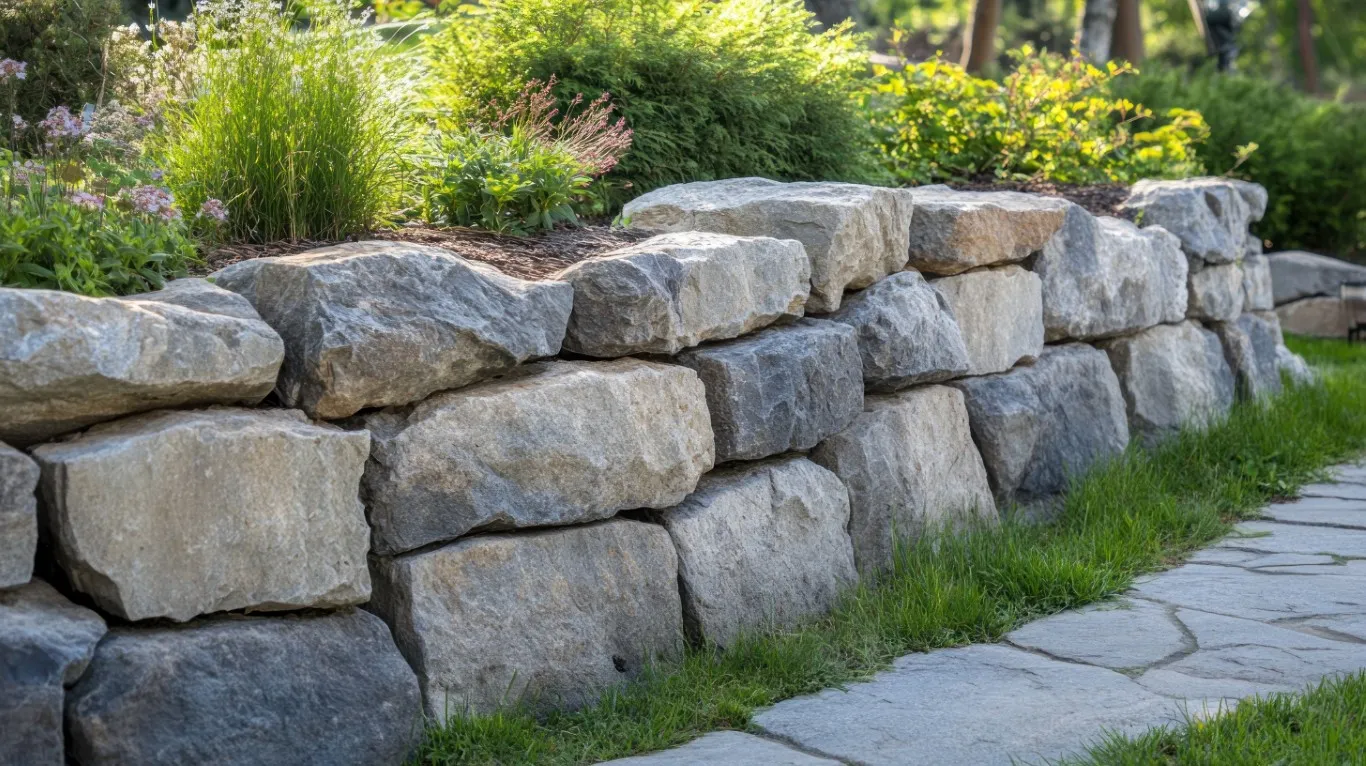
Boulders do heavy lifting in Utah xeriscapes. Placed in groups of one, three, or five, and partially buried so they look naturally set, they add permanence and echo the surrounding mountains. Local stone yards carry Utah quartzite, moss rock, and granite boulders that match the regional palette.
There is a practical payoff too. Every square foot of patio, walkway, or boulder is a square foot you never have to water, weed, or replant. Hardscape lowers maintenance while raising the sense of intention.
Material choice matters for our climate. Utah’s freeze-thaw cycles are hard on poorly installed surfaces, which is why professional installation pays off. Utah Valley Landscaping’s pavers and hardscaping work and concrete patio and walkway installation are built to handle those seasonal swings.
Ready to combine plants and hardscape into one cohesive plan? Contact Utah Valley Landscaping at (801) 899-9199 to talk through your yard and request an estimate. The right balance of hardscape and planting also depends on where the yard sits: front or back.
Front Yard vs. Backyard Xeriscape: How Should the Approaches Differ?
Front yard xeriscape prioritizes curb appeal and HOA compliance, while backyard xeriscape prioritizes usable family space and privacy. The same water-wise principles apply, but the design goals pull in different directions.
Front and back yards ask different questions. Your front yard is public-facing and often governed by HOA rules, so xeriscape front yard ideas lean toward tidy, symmetrical, curb-appeal-driven layouts. Your backyard is where your family actually lives, so it prioritizes function and comfort.
For front yards in Utah County neighborhoods, aim for a clean, welcoming look that neighbors admire. Think structured planting beds framed by crisp edging, a defined pathway to the door, and a restrained plant palette repeated for rhythm. Many HOAs in communities like Alpine and Highland have specific rules about gravel percentages, plant coverage, and setback plantings.
A critical reminder: HOA rules vary from one community to the next, and no design is guaranteed approval. Always confirm your specific HOA’s landscaping standards before you finalize a plan. Utah Valley Landscaping works within HOA environments across Highland and understands the balance those communities expect.
Backyards flip the priorities. Here, xeriscape supports living. You want low-water planting zones around a patio, a fire pit, or a play area, with hardscape doing the heavy work in the center where the family gathers. Privacy plantings of native shrubs replace the front yard’s showpiece beds.
Both approaches share the same water-wise foundation. What changes is emphasis: display and compliance out front, connection and comfort out back. Getting either one right depends on avoiding a handful of common missteps.
What Are the Most Common Xeriscape Design Mistakes in Utah?
The most common xeriscape mistakes in Utah are poor drainage planning, using too much rock, ignoring soil pH, overcrowding immature plants, and skipping establishment watering. Each one is avoidable with upfront planning.
Xeriscaping Utah County goes wrong in predictable ways. Knowing these pitfalls ahead of time saves you from tearing out a failed design a year later.
Here are the mistakes to avoid:
- Ignoring drainage. Alkaline clay soils common in Utah Valley drain slowly. Without proper grading, a xeriscape can pool water and rot plant roots after storms or snowmelt. Plan drainage before you plant.
- Overusing rock. Blanketing the entire yard in gravel creates a heat sink that bakes plants and radiates warmth back at your home in summer. Rock has a place, but it should frame plantings, not replace them.
- Skipping the soil test. Utah’s alkaline soil rejects many plants that do fine elsewhere. Choosing species without checking alkaline tolerance is a recipe for slow decline. Match every plant to its Zone rating and soil preference.
- Overcrowding young plants. Nursery plants look small, so people plant them too close. Two seasons later they are crammed and fighting for space. Space for mature size, not planting-day size.
- Cutting establishment watering too soon. Xeriscape plants are drought-tolerant once rooted, not on day one. Skipping consistent water through the first one to two seasons is the fastest way to lose new plantings.
- Treating it as a plant list instead of a design. The barren, cookie-cutter look happens when there is no layering, no focal point, and no hardscape rhythm. A custom design is what makes a xeriscape look intentional.
Drainage deserves extra attention in our region, and this overview of drainage solutions every Utah yard should have is worth a read before you break ground.
Most of these mistakes trace back to skipping the planning phase. A professional design maps drainage, soil, hydrozones, and plant spacing before anyone touches a shovel, which is where lasting results start. Browse Utah Valley Landscaping’s project portfolio to see before-and-after photography of real Utah xeriscape installations, the clearest way to picture what your own yard can become.
Your dream outdoor space starts with a plan built for Utah’s soil, elevation, and climate. Contact Utah Valley Landscaping at (801) 899-9199 or reach out through the contact page to discuss your xeriscape project and request an estimate. Every design is custom-tailored to your yard and your family, and there is no cookie-cutter here.
Frequently Asked Questions
What plants are best for a Utah xeriscape yard?
The best plants for a Utah xeriscape are cold-hardy, alkaline-tolerant species rated for USDA Zone 5b to 6a. Ornamental grasses like blue fescue and little bluestem add movement, while flowering perennials such as penstemon, Russian sage, yarrow, and blanket flower rotate color through the seasons. Native shrubs including rabbitbrush, serviceberry, and sagebrush provide structure and winter interest. Always confirm a plant’s cold-hardiness and alkaline tolerance before buying, since Utah County soil and winters are unforgiving to species that thrive elsewhere.
Can a xeriscape yard look lush and colorful instead of barren?
Yes, and the difference comes down to design rather than plant choice alone. A barren look happens when plants are dropped into flat gravel with no layering or focal points. To create fullness, layer tall grasses behind mid-height perennials and low ground covers in front, and pair contrasting textures and colors like blue-gray fescue with purple Russian sage and coppery little bluestem. Living ground covers and staggered bloom times keep something drawing the eye in every season.
How do I xeriscape my front yard without violating HOA rules in Utah?
Start by confirming your specific HOA’s landscaping standards before finalizing any plan, because rules vary widely between communities and no design is guaranteed approval. Many HOAs in areas like Alpine and Highland regulate gravel percentages, minimum plant coverage, and setback plantings. Aim for a tidy, curb-appeal-driven layout with structured beds, crisp edging, a defined pathway, and a restrained plant palette repeated for rhythm. Working with a landscaper familiar with local HOA expectations helps keep your design compliant and attractive.
What is the best ground cover for a xeriscape in Utah County?
There is no single best choice, since decomposed granite, river rock, bark mulch, and living ground covers each carry tradeoffs. Decomposed granite creates clean, modern pathways and drains well in alkaline soil, while river rock adds texture and works in dry creek beds but radiates heat. Bark mulch retains soil moisture and helps plants establish faster, making it ideal around perennials and shrubs. Most well-designed Utah yards blend these, using rock in low-water zones for durability and bark in moderate-water zones for moisture.
How much of my yard should be plants vs. rock in a xeriscape design?
Rock should frame plantings rather than replace them, so avoid blanketing the entire yard in gravel. Too much rock creates a heat sink that bakes nearby plants and radiates warmth back at your home during summer. A balanced design typically dedicates the largest area to low-water native plantings, with rock and hardscape used for structure, pathways, and accents. The exact ratio depends on your hydrozones, HOA plant-coverage requirements, and the look you want, so tailor it zone by zone.
What is hydrozoning and do I need it for a small yard?
Hydrozoning means grouping plants by water requirement into distinct zones so irrigation runs efficiently and the yard looks organized. A typical layout uses a small high-water accent area, a moderate-water transitional zone, and a large low-water zone filled with natives. Even a small yard benefits, because clustering plants by thirst prevents you from drowning drought-tolerant species or starving thirstier ones. It also creates visual coherence, since plants with similar needs often share a similar look and rhythm.
How long does it take for a xeriscape yard to look established?
New plantings typically need consistent irrigation through their first one to two growing seasons to root deeply. During that window, plants are filling in and establishing, so the yard will look fuller with each season. After roots are established, low-water zones lean heavily on Utah’s natural precipitation and require far less supplemental water. Spacing plants for their mature size rather than their planting-day size also ensures the design reaches its intended fullness without overcrowding.