

The wrong lawn decision can cost you significantly over the years you own your home, either in a punishing summer water bill or in a conversion you rush and regret. Xeriscaping in Utah typically costs more upfront than sod but uses less water over time, while a traditional lawn costs less to install and more to run. The right answer depends on your lot size, water goals, and how long you plan to stay. Our xeriscaping and water-wise landscaping services help Utah County homeowners weigh both honestly.
How Are Xeriscaping and Traditional Landscaping Actually Defined?
Xeriscaping is a landscaping approach built around drought-tolerant plants, efficient irrigation, and mulched planting beds that reduce water use. Traditional landscaping in Utah usually centers on a sod lawn with a spray irrigation system. Both can look polished, and both can include hardscape.
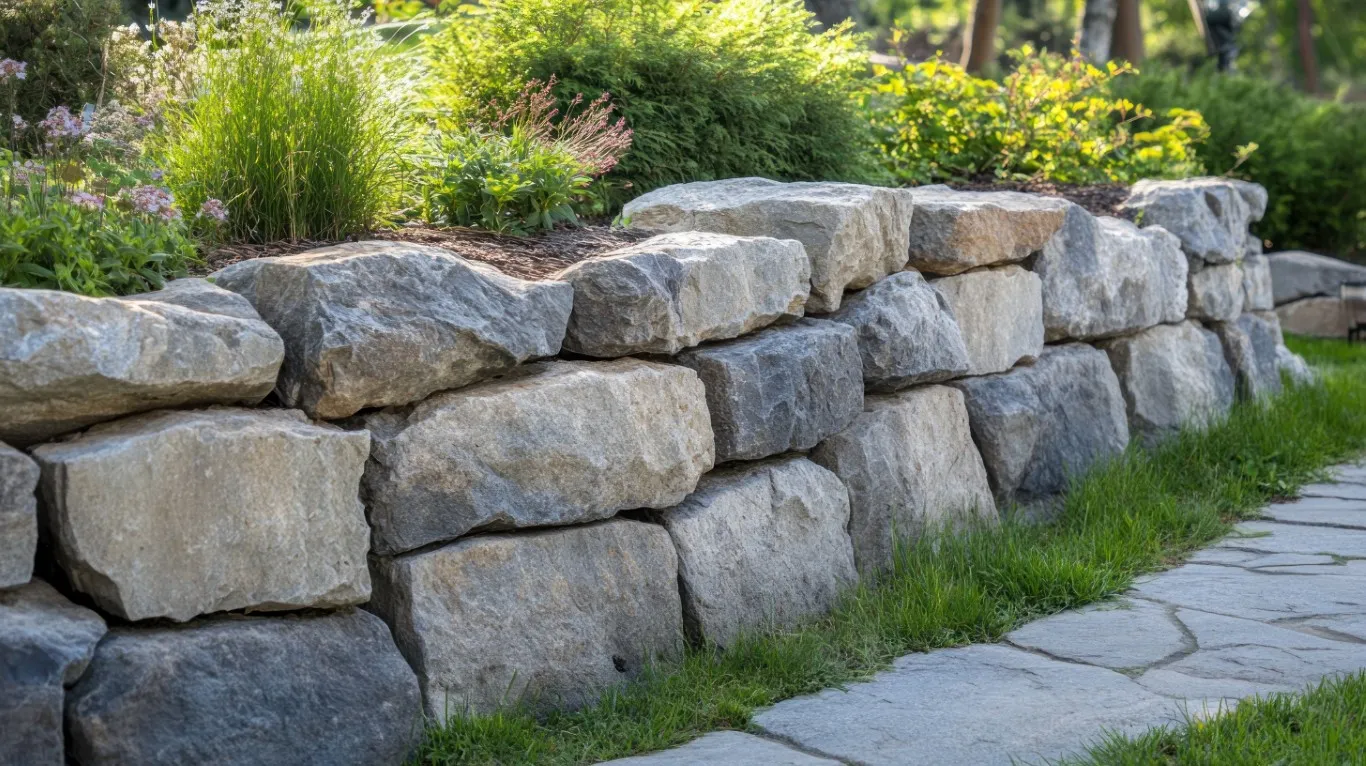
The biggest myth is that xeriscape means a yard full of gravel and a lone cactus. A well-designed xeriscape includes native and adapted perennials, ornamental grasses, shrubs, groundcovers, and drip irrigation. Color, texture, and seasonal interest are all part of the picture.
Here is where the two overlap more than most homeowners expect:
- Both often use hardscape like patios, walkways, and seating areas
- Both can include trees for shade and structure
- Both benefit from proper drainage and soil prep
- Both can incorporate a small functional lawn area for kids or pets
Hardscape elements matter to either style. A well-placed patio or paver walkway reduces the amount of yard you need to water or maintain regardless of which route you choose. If you are weighing surfaces, our guide to pavers and concrete hardscaping explains how those features fit into any Utah yard.
The point is simple. This is not lawn versus rock. It is a spectrum, and most Utah County homeowners land somewhere in the middle. This is the foundation of any real drought resistant landscaping Utah decision.
How Much Does Xeriscaping vs. Sod Cost to Install in Utah County?
Xeriscaping generally costs more per square foot to install than sod because of soil amendment, drip irrigation, plant material, and mulch. A traditional sod lawn is one of the least expensive surfaces to install upfront. The gap is real, but so is the payback timeline.
Rather than quote figures that vary by yard, here is what drives the difference on the Utah County projects we see.
For a traditional sod lawn, the main line items are:
- Grading and basic soil prep
- Spray irrigation system with heads and controller
- Sod delivery and installation
For a xeriscape, the line items look different:
- Soil amendment for drought-tolerant plantings
- Drip irrigation instead of spray heads
- Plant material (perennials, shrubs, ornamental grasses)
- Weed barrier and quality mulch or decorative rock
- Optional hardscape or boulders for structure
Xeriscape carries a higher design cost because it is not a roll-out-and-water product. Every water-wise yard we build is custom-tailored to the light, slope, and soil on that specific lot. That planning is exactly why an established xeriscape thrives while a rushed one struggles past year one. This is a key part of any honest xeriscape cost comparison Utah.
The trade-off is what happens after installation. A lawn’s costs continue every month through water and maintenance. A xeriscape front-loads more of its cost, then runs lean. This is at the heart of comparing costs across the two approaches for xeriscaping Utah County projects.
Because exact numbers depend on square footage and site conditions, the most reliable move is a real quote. You can contact Utah Valley Landscaping for a free estimate and get figures based on your actual yard rather than an online average.
What Are the Real Water Savings of Xeriscaping in Utah?
Xeriscaping in Utah reduces landscape water use substantially compared to a traditional lawn once plants are established. That matters more here than almost anywhere else in the country, and it is the core of any water savings xeriscaping Utah conversation.
Utah is the second-driest state in the nation and has the highest per-capita water use rate. The Utah Division of Water Resources has repeatedly pointed to outdoor watering, especially turf, as a leading use of residential water in the state. On many Utah County lots, a large share of a home’s total water use goes to the lawn during summer.
Here is the practical picture. A traditional sod lawn in Utah’s climate needs consistent irrigation from late spring through early fall to stay green through hot, dry months. A drought-tolerant landscape needs regular water in its first year to establish roots, then far less once mature. It uses less water, not none.
The financial difference shows up on your water bill over time:
- A lawn’s water demand stays high every summer, year after year
- A xeriscape’s water demand drops steeply after establishment
- Tiered water rates mean heavy summer lawn use can push you into higher pricing brackets
Water rates in Utah vary by municipality, and providers like the Central Utah Water Conservancy District and your local city water department set and adjust them regularly. Rates are approximate and change over time, so check your current rate structure directly with your provider, because tiered pricing is exactly where a thirsty lawn gets expensive.
We cover the bill side of this in more depth in our piece on whether water-wise landscaping is worth the investment. The short version: the water gap is where a xeriscape earns back its higher install cost.
How Much Maintenance Does Each Option Really Require?
A traditional lawn requires ongoing weekly maintenance through the growing season, while an established xeriscape requires far less regular upkeep, though not zero. Neither is truly hands-off, and anyone claiming a xeriscape needs no water or no work is overselling it. Understanding the real xeriscape maintenance requirements is what keeps homeowners happy long term.
A Utah lawn typically needs:
- Weekly mowing from spring through fall
- Regular fertilizing, aeration, and weed control
- Sprinkler adjustments, repairs, and spring startup
- Fall winterization to protect the system from freeze damage
Mowing alone can eat a chunk of every Saturday during the growing season, plus the equipment, fuel, and storage that come with it.
An established xeriscape shifts the work to seasonal tasks instead of weekly ones:
- Occasional pruning and cleanup of perennials
- Periodic weeding, especially in the first couple of years
- Refreshing mulch every few years
- Drip line checks and minor adjustments
The catch is the first year. New drought-tolerant plantings need attention and consistent water to establish. Xeriscape upkeep is lowest after roots are set, not on day one. Homeowners who understand that upfront are the ones happiest with the result.
For families who want a low maintenance yard Utah solution without giving up every weekend to the mower, the reduced ongoing burden is often the deciding factor, even more than the water savings.
Does Xeriscaping Hurt or Help Curb Appeal and Resale?
A well-designed xeriscape looks every bit as attractive as a manicured lawn and can be a genuine selling point in Utah’s water-conscious market. A sparse, poorly planned rock yard, by contrast, can hurt curb appeal. Design quality decides which outcome you get.
The fear is understandable. Many homeowners picture xeriscape as bare gravel because they have seen it done badly. A thoughtfully layered water-wise landscape with mature perennials, ornamental grasses, and structured planting beds reads as intentional and high-end, not neglected.
In Utah’s real estate context, buyers increasingly understand water costs and restrictions. A yard that stays beautiful without a punishing summer water bill is an asset many shoppers now actively want. We do not promise a specific resale increase, because that depends on your home, market, and execution, but the buyer appeal of a smart water-wise yard is real and growing.
The mistake to avoid is treating drought tolerant landscaping vs grass Utah as an aesthetic downgrade. Done right, it is not. A custom design tailored to your home’s style is what separates a yard that adds value from one that does not.
What Utah Rebate Programs Help Offset a Xeriscape Conversion?
Utah homeowners who remove turf and replace it with water-wise landscaping may qualify for turf removal rebates and incentive programs offered through state and regional water agencies. These programs can meaningfully reduce the upfront cost gap of converting.
Utah has run statewide and regional turf-removal incentives, often coordinated through the Utah Division of Water Resources and regional providers like the Central Utah Water Conservancy District, along with participating city water departments. Programs commonly offer a turf removal rebate Utah based on the square footage of lawn you replace with qualifying landscaping.
Two important cautions:
- Rebate amounts and rules change every year, and funding can run out, so verify current terms and dollar amounts directly with the issuing agency before you plan around them
- Programs usually have requirements, such as minimum plant coverage or specific irrigation standards, that your design must meet to qualify
Working with a knowledgeable local installer pays off here. Utah Valley Landscaping can help you design a conversion that aligns with current program requirements and can assist with rebate program qualification so your yard actually qualifies. We serve Utah County including Alpine, Highland, and surrounding communities, and we stay current on how these programs work.
Because Utah water restrictions landscaping rules continue to tighten, converting sooner rather than later can position you ahead of future requirements while incentives are still available.
Which Option Is the Better Fit for Your Yard?
The better choice comes down to how long you plan to stay, how you use your yard, your HOA rules, and whether you value low upfront cost or lower long-term cost. There is no universal winner, and honest advice sometimes points to keeping a lawn.
Use this framework to self-qualify.
A traditional lawn is often the right call when:
- You have young kids or pets who need open, soft play space daily
- You are on a tight upfront timeline and want the lowest install cost now
- You are selling soon and your local market still expects turf
- You genuinely enjoy lawn care as a routine
Xeriscaping is often the better fit when:
- You plan to stay long enough to recoup the higher install cost through water savings
- You want a low maintenance yard Utah setup with fewer weekly chores
- Your summer water bills already feel painful
- You want to get ahead of tightening water restrictions
The hybrid approach fits most families. You do not have to choose all lawn or all rock. Many of the best Utah County yards we build keep a small, functional grass area for play and convert the rest to water-wise plantings and hardscape. For that central play zone, artificial turf is a strong middle-ground option: it looks green year-round, needs no watering, and handles Utah’s temperature swings well.
One more step before you commit: check your HOA. Some Utah communities have embraced water-wise landscaping, but requirements vary, and approval is not automatic, so confirm your specific CC&Rs before you replace grass with xeriscape Utah. It is far easier to design around the rules than to redo work later.
If you want a custom plan built for your lot, your family, and Utah’s climate, contact Utah Valley Landscaping to talk through your options and request a free estimate. We will help you build a yard where your family makes memories for years, whether that is a lush lawn, a water-wise landscape, or the smart hybrid in between. Call us at (801) 899-9199 to get started.
Frequently Asked Questions
How much water does xeriscaping save compared to a traditional lawn in Utah?
An established xeriscape uses substantially less water than a traditional sod lawn in Utah’s dry climate, often cutting landscape water use by a large margin once plants mature. A lawn demands consistent irrigation all summer long, year after year, while a drought-tolerant landscape needs regular water only during its first-year establishment period and far less afterward. Because Utah is the second-driest state with the highest per-capita water use, outdoor watering is a leading residential water expense here. The savings show up clearly on summer water bills, especially where tiered pricing penalizes heavy use.
Does Utah offer rebates for removing grass and installing xeriscape?
Yes, Utah homeowners who replace turf with qualifying water-wise landscaping may be eligible for turf removal rebates offered through state and regional water agencies. These programs are often coordinated through the Utah Division of Water Resources, the Central Utah Water Conservancy District, and participating city water departments, and typically pay based on the square footage of lawn removed. Rebate amounts, rules, and available funding change every year, so verify current terms directly with the issuing agency before planning around them. Most programs also require minimum plant coverage or specific irrigation standards, which a knowledgeable installer can help you meet.
Will a xeriscape yard look nice enough to satisfy my HOA?
A well-designed xeriscape can look just as polished as a manicured lawn and often satisfies HOA standards, but approval is never automatic. HOA requirements vary widely across Utah communities, and some have embraced water-wise landscaping while others still expect traditional turf. The key is to review your specific CC&Rs before starting any conversion and design around those rules from the beginning. A layered, intentional design with perennials, ornamental grasses, and structured beds reads as high-end rather than neglected, which makes HOA approval far more likely.
How long before a xeriscape landscape is fully established and low maintenance?
Most xeriscape landscapes become fully established and settle into their low-maintenance rhythm after the first growing season, though some plantings take a couple of years to reach full maturity. The first year requires the most attention, with consistent watering and regular weeding to help drought-tolerant roots establish. After that, upkeep shifts from weekly chores to occasional seasonal tasks like pruning, mulch refreshing, and drip line checks. Homeowners who understand that year one demands real effort tend to be the happiest with the long-term result.
Is it expensive to convert an existing lawn to xeriscape in Utah County?
Converting a lawn to xeriscape generally costs more upfront than installing sod because of soil amendment, drip irrigation, plant material, and mulch. The higher cost also reflects custom design work, since every water-wise yard is tailored to the specific light, slope, and soil of your lot rather than rolled out like sod. Turf removal rebates can meaningfully offset that upfront gap if your project qualifies. Because exact figures depend on square footage and site conditions, a real quote based on your actual yard is the most reliable way to know your cost.
What is the break-even point between xeriscape and traditional lawn costs in Utah?
The break-even point is where a xeriscape’s lower ongoing water and maintenance costs offset its higher upfront installation price. A lawn costs less to install but keeps costing you every month through summer irrigation, mowing, fertilizing, and system upkeep, while a xeriscape front-loads its expense and then runs lean. Factors like your lot size, local water rates, tiered pricing brackets, and available rebates all shift how quickly you reach that point. Homeowners who plan to stay in their home long term are the most likely to come out ahead financially with a xeriscape.
Can I have some grass and still do xeriscaping in my yard?
Absolutely, and a hybrid approach fits most Utah County families better than going all lawn or all rock. Many of the best yards keep a small, functional grass area for kids and pets while converting the rest to water-wise plantings and hardscape. This gives you soft play space where you need it and lower water and maintenance costs across the rest of the yard. For the central play zone, artificial turf is another strong middle-ground option, staying green year-round without any watering.