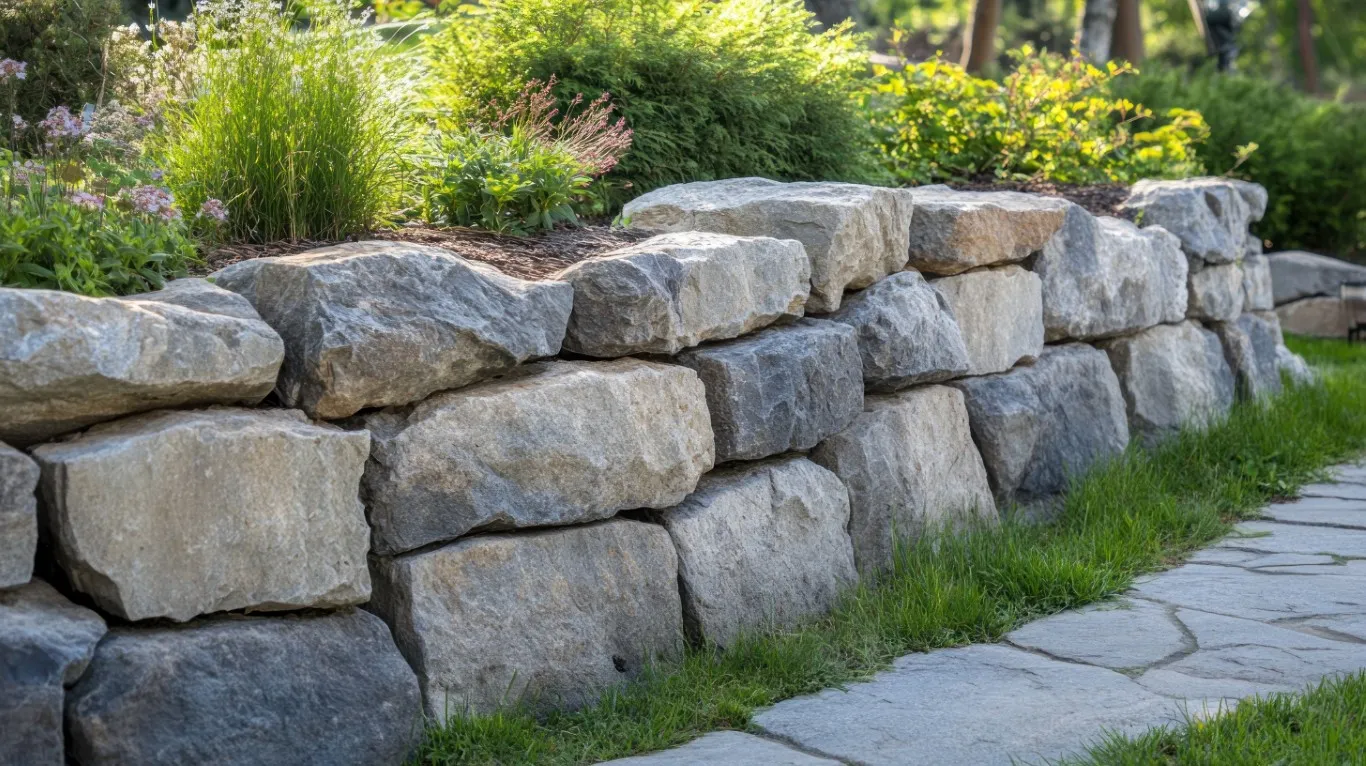


That steep, unusable slope behind your house is not just an eyesore, it is a slow-moving liability that erodes a little more with every monsoon storm. Landscaping on a slope in Utah means combining retaining walls, terracing, drainage, and deep-rooted plantings to turn a hillside into safe, usable space that holds its ground for decades. Having worked on hillside lots throughout Alpine and Highland Utah, we approach these projects through full-service landscape design and installation built for local terrain.
Why Sloped Yards Require a Different Landscaping Strategy in Utah
Sloped yards in Utah demand engineering-first thinking because our clay-heavy foothill soils, concentrated storm events, and freeze-thaw cycles turn a poorly built hillside into an active erosion and safety problem, not a cosmetic one.
Foothill lots across Alpine, Highland, and Cedar Hills sit on clay-rich soil that holds water, then expands and contracts. When that soil freezes and thaws repeatedly through the colder months, roughly November into March at foothill elevations, it shifts. A wall or slope built without accounting for that movement cracks, bulges, and eventually fails.
Rainfall here is the second factor. Utah is a semi-arid state that receives limited annual precipitation, but much of it arrives in short, intense bursts during the July through September monsoon season. A dry slope that looks stable in June can shed sheets of water in a single August thunderstorm, carrying soil, mulch, and root systems downhill.
Add grade to the mix and the stakes climb. Many Wasatch foothill lots carry moderate to steep grades where water moves fast, soil has little to grip, and gravity works against every plant and structure you install. Slope stabilization in Utah is a structural discipline. Getting the drainage, soil compaction, and wall design right the first time protects everything you build on top of it. The Natural Resources Conservation Service offers useful background on soil erosion and how ground cover reduces it.
How Do You Measure Slope Grade Before Landscaping a Hilly Lot?
You measure slope grade by dividing the vertical rise by the horizontal run and multiplying by 100, which gives you a percentage that determines which solutions are realistic and code-compliant on your lot.
To do this at home, stake a level string from the top of your slope out horizontally, measure the horizontal distance (run), then measure straight down from the string’s end to the ground (rise). A 3-foot drop over a 20-foot run is a 15 percent grade.
Your grade sets your options:
- Mild (under 10%): Often manageable with regrading, ground cover, and surface drainage. Some of this work is DIY-friendly for confident homeowners, though drainage still matters.
- Moderate (10 to 25%): Usually requires retaining walls, terracing, or both. Professional assessment is essential here, because soil behavior and drainage load increase sharply. This is not DIY territory.
- Steep (25%+): Almost always requires engineered retaining systems, integrated drainage, and sometimes a licensed engineer’s stamp. Professional assessment is required.
Grade is only part of the picture. Soil type, water sources uphill, and existing vegetation all shift what your lot needs. A moderate slope on saturated clay behaves like a steep slope on well-draining soil. An on-site evaluation reads all of these variables together, which is why we walk the property before recommending any approach. For moderate to steep slopes, that professional assessment is not optional.
How Does Terracing Create Usable Space on a Sloped Backyard?
Terracing converts a single unusable incline into a series of flat, level tiers held in place by retaining walls, giving you real square footage for patios, play areas, gardens, and lawn where there was only slope before.
Think of terracing like steps carved into the hillside. Each tier is created by cutting into the slope, building a retaining wall at the outer edge, then backfilling behind it with compacted, well-draining material. The result is a flat pad you can actually use.
A terraced yard in Utah works best when tier heights and depths are planned around how you want to live outside. A few practical guidelines:
- Tier depth: Aim for enough flat depth to make each level functional. A tier meant for a dining patio needs more depth than one holding a planting bed.
- Wall height per tier: Keeping individual walls lower and stacking more tiers is often safer and more stable than one tall wall, especially on clay soil.
- Spacing: Leave room between tiers for planting strips that absorb water and soften the transition between levels.
How many tiers your lot supports depends on total slope height and lot width. A modest foothill backyard might support two or three usable levels. A larger Highland Utah slope lot can carry more, with each level assigned a purpose: an upper garden, a middle lawn for the kids, a lower paver patio or hardscaped gathering space.
The payoff is real living space. A terraced hillside becomes an extension of your home where your family gathers, plays, and creates memories, instead of a slope everyone avoids. Because each tier depends on the wall below it, the terracing and wall engineering must be designed together as one system. These are among the most requested hillside landscaping ideas Utah homeowners bring to us.
Which Retaining Wall Materials Work Best for Utah Hillside Projects?
The best retaining wall for a slope in Utah depends on wall height, soil load, and aesthetics, but the four most common choices are segmental concrete block, natural boulder, timber, and poured concrete, each with real tradeoffs in Utah’s freeze-thaw climate.
Here is how they compare for foothill projects:
- Segmental concrete block (Allan Block, Versa-Lok): Engineered interlocking systems built for slope stabilization. They handle Utah’s freeze-thaw movement well, offer strong load capacity, and come in finishes that suit most homes. These are a workhorse choice for terraced Utah lots because they combine strength with clean, repeatable construction.
- Natural boulder walls: Large stone boulders stacked and set into the slope. They look native to the Wasatch foothills and drain well through the gaps between stones. Boulder walls suit a rugged, natural aesthetic and perform reliably when properly seated. Many Alpine homeowners prefer them for exactly that mountain look.
- Timber: Attractive and softer in appearance, but wood has the shortest lifespan in Utah’s wet-freeze-dry cycle. Moisture and repeated freezing shorten its service life compared to block or stone, so it fits lighter, lower applications better than tall structural walls.
- Poured concrete: Extremely strong and used for taller structural walls or specific engineering situations. It offers maximum load capacity but requires precise forming, proper drainage, and expansion planning to resist cracking in freeze-thaw conditions.
Whatever the material, the wall is only as good as what sits behind it. Proper drainage aggregate, filter fabric, and compacted base are what keep any wall standing through Utah winters. A beautiful wall built on poor drainage fails from the back, invisibly, until it bulges.
One critical note on regulations: many Utah cities set a threshold, commonly around 4 feet of exposed wall height, above which an engineered design or building permit is typically required. Thresholds and rules vary by city, so verify requirements with your local planning department in Alpine, Highland, Lehi, or wherever you live before construction begins. For a deeper look at wall design and failure prevention, our guide on retaining walls that solve erosion and last decades breaks down the engineering behind lasting results.
What Plants and Ground Covers Prevent Erosion on Utah Slopes?
Deep-rooted, drought-tolerant plants are your best natural defense for erosion control landscaping in Utah County, because their root systems physically bind the soil while their foliage slows runoff during monsoon downpours.
Between and below your retaining walls, living ground cover for hills in Utah does structural work that no wall can do alone. Roots hold the top layer of soil in place, and dense foliage breaks the force of falling rain before it hits bare ground.
For Utah County’s semi-arid climate, prioritize plants that thrive on limited water once established:
- Creeping juniper: A tough, spreading evergreen ground cover with strong roots, well-suited to sunny, sloped exposures.
- Kinnikinnick (bearberry): A native, low-growing evergreen that spreads and holds soil on dry slopes.
- Rocky Mountain penstemon and native wildflowers: Deep-rooted and adapted to local conditions, adding color while stabilizing soil.
- Ornamental grasses: Fibrous root systems grip soil effectively and handle wind and temperature swings.
- Rubber rabbitbrush and native shrubs: Larger root structures anchor bigger sections of slope on the lower tiers.
Grouping these into a cohesive, low-water design is where a slope becomes both stable and beautiful. This approach is essentially xeriscaping and drought-tolerant landscaping applied to a hillside, using plants that survive Utah’s dry stretches without constant irrigation. Utah State University Extension maintains helpful water-wise plant guidance for Utah landscapes if you want to research species further.
Timing matters too. Establishing plantings gives roots a chance to take hold before they face a full monsoon season. On steep sections, temporary erosion control fabric or mulch netting protects new plantings while roots develop. Bare soil on a slope is the single biggest erosion risk, so covered ground, whether by plants or protective material, is always the goal.
Why Is Drainage the Most Important Part of Sloped Yard Landscaping?
Drainage is the make-or-break element of any Utah hillside project because water, not gravity alone, is what destroys retaining walls and washes out terraces over time. Controlling where water goes protects everything else you build.
On a slope, water always wins if you ignore it. During monsoon season, uncontrolled runoff pools behind walls, saturates clay soil, and adds enormous pressure that pushes structures apart from behind. Well-designed drainage for a sloped backyard in Utah moves water safely off and through the hillside.
The systems that belong in a Utah slope project include:
- Surface grading: Shaping each tier so water sheds toward intended drainage paths rather than pooling against walls or foundations.
- Swales: Shallow, planted channels that catch and redirect surface runoff, slowing water and guiding it away from vulnerable areas.
- French drains: Perforated pipe set in gravel behind or below retaining walls that collects subsurface water and carries it away before pressure builds.
- Wall drainage: Gravel backfill, filter fabric, and weep outlets built into every retaining wall so trapped water has an exit.
Skipping drainage is the most common and most expensive slope mistake we see. A wall built without proper drainage can look perfect for a year or two, then fail suddenly after a wet spring or a heavy monsoon storm. Because Utah’s water arrives in intense bursts, the system has to handle peak volume, not just average conditions. If you want more on managing water across a property, our overview of drainage solutions every Utah yard should have covers the fundamentals in more detail.
Contact Utah Valley Landscaping to walk your slope and discuss a drainage and stabilization plan for your lot. You can reach us through our contact page or by calling (801) 899-9199.
Why Does Landscaping a Sloped Yard Cost More Than a Flat Lot?
Sloped yard landscaping typically costs more than flat-lot work because it requires more labor, specialized equipment, additional structural materials, engineered drainage, and sometimes a licensed engineer, all of which scale with the steepness and height of your slope.
Here is where the added investment goes on a hillside project:
- Labor and access: Moving soil, base rock, and wall materials uphill takes more time and effort. Steep grades often limit equipment access, meaning more manual work on the toughest sections.
- Equipment: Excavation, cutting into the slope, and compacting fill require machinery suited to inclines, which adds to project scope.
- Structural materials: Retaining walls, drainage aggregate, filter fabric, and compacted base all add material volume that flat lawns simply do not need.
- Drainage systems: French drains, swales, and wall drainage are non-negotiable on a slope and represent real materials and labor.
- Engineering: Taller walls or steep grades can require an engineered design or permit, which adds professional fees but protects your investment and your safety.
Because every foothill lot differs in slope, soil, and water load, honest cost estimates come only after an on-site evaluation. Total project costs vary widely depending on scope, and we will not quote a hillside project sight unseen, because the grade and soil conditions drive the numbers too heavily. For a general sense of how projects are scoped and priced across our services, our guide on what landscaping really costs in Utah Valley offers a helpful starting point.
Here is the way to think about it: a properly built slope is a one-time investment that protects your home and reclaims usable land. A poorly built one becomes a recurring repair bill as walls fail and soil washes away. Doing it right the first time is what keeps your hillside working for decades.
If you own a sloped or terraced lot in Alpine, Highland, or anywhere across Utah County and want to understand what a realistic, professional solution looks like, contact Utah Valley Landscaping. Whether you are exploring Alpine Utah hillside landscaping or Highland Utah slope landscaping, we will assess your slope on site, explain your options, and provide an estimate built around your lot’s specific conditions. Reach us through our contact page or call (801) 899-9199 to get started.
Frequently Asked Questions
How do I stop erosion on a sloped yard in Utah?
Stopping erosion on a Utah slope requires a combination of drainage control and deep-rooted ground cover, not just one fix. Start by directing water away from the slope with grading, swales, or French drains so monsoon runoff cannot cut channels into bare soil. Then cover exposed ground with drought-tolerant, deep-rooted plants like creeping juniper or kinnikinnick that physically bind the soil. On steeper sections, retaining walls and erosion control fabric protect the hillside while new plantings establish their roots.
What plants work best on a hillside in Utah County?
The best hillside plants for Utah County are drought-tolerant species with deep or fibrous root systems that grip soil and survive the region’s dry stretches. Creeping juniper and kinnikinnick spread quickly and hold topsoil on sunny slopes, while Rocky Mountain penstemon and native wildflowers add color while stabilizing the ground. Ornamental grasses handle wind and temperature swings with roots that lock soil in place, and larger native shrubs like rubber rabbitbrush anchor bigger lower-tier sections. Grouping these into a cohesive low-water design keeps the slope both stable and attractive.
Do I need a permit to build a retaining wall on a slope in Utah?
In many Utah cities, retaining walls above a certain exposed height, commonly around 4 feet, require an engineered design or building permit. Thresholds and specific rules vary from one municipality to the next, so a wall that is fine in one city may need approval in another. Always verify requirements with your local planning department in Alpine, Highland, Lehi, or wherever your property sits before construction begins. Taller or terraced walls on steep grades are especially likely to trigger permit and engineering requirements.
How much does it cost to terrace a sloped backyard in Utah?
Terracing costs vary widely because pricing depends on slope steepness, wall height, soil conditions, and how many tiers your lot supports. A hillside project involves more labor, specialized equipment for inclines, structural materials like retaining walls and drainage aggregate, and engineered drainage systems that flat lots never need. Steeper grades and taller walls can also require an engineer’s stamp, which adds professional fees. Because these variables drive the numbers so heavily, an accurate estimate only comes after an on-site evaluation of your specific lot.
Can I put a patio on a sloped yard in Utah?
Yes, and terracing is the standard way to do it. By cutting into the slope and building a retaining wall at the outer edge, you create a flat, level pad with enough depth to hold a paver patio or gathering space. A patio tier needs more flat depth than a planting bed, so it should be planned around how you want to use the space. The wall and drainage supporting that tier must be engineered properly, because the patio is only as stable as the structure holding it in place.
How steep is too steep to landscape without a retaining wall?
Slopes under 10 percent grade are often manageable with regrading, ground cover, and surface drainage alone. Once you reach a moderate grade of 10 to 25 percent, retaining walls or terracing usually become necessary because soil behavior and drainage load increase sharply. Anything steeper than 25 percent almost always requires engineered retaining systems and sometimes a licensed engineer’s stamp. Keep in mind that soil type matters too, since a moderate slope on saturated clay can behave like a much steeper slope on well-draining soil.
What type of retaining wall lasts longest in Utah’s climate?
Segmental concrete block systems and natural boulder walls tend to last longest in Utah’s freeze-thaw climate when built correctly. Segmental block handles ground movement well, offers strong load capacity, and delivers clean, repeatable construction. Boulder walls drain freely through the gaps between stones and perform reliably when properly seated. Timber has the shortest lifespan because moisture and repeated freezing break it down faster, so regardless of material, proper drainage aggregate, filter fabric, and a compacted base are what truly determine how long any wall survives Utah winters.