

You invested in that patio, pool, or play area, so it’s frustrating when the whole yard disappears at sunset. The best outdoor lighting ideas for a Utah backyard layer three kinds of light: ambient glow, task light for paths and steps, and accent light for trees, walls, and features. Here’s how Utah Valley Landscaping plans outdoor lighting for Utah backyards around snow, freeze-thaw, and wind.
Why Does Backyard Lighting Change How Your Family Uses the Yard?
Good lighting turns a yard that goes dark at sunset into a place your family keeps using after dinner, adding hours to the patio, pool, or court you’ve already built.
In late June, sunset in Utah County lands close to 9 p.m., and the best part of the day often comes after the heat breaks, just as the light fades. Without a plan, that’s when everyone heads inside. With a well-lit space, the kids shoot one more round of hoops, friends gather around the fire pit, and the patio becomes a true extension of your home.
By December, the sun sets around 5 p.m., so an unlit yard is off-limits for most of the evening. A lit yard gives your family a reason to step outside after work instead of waiting for the weekend. That’s why backyard lighting design Utah families actually use has to work in every season.
That’s what we mean by creating memories, not just a yard: outdoor spaces you won’t want to leave, at any hour.
What Are the Three Layers of Outdoor Lighting?
The three layers are ambient, task, and accent lighting. Ambient light sets the mood, task light helps people see where they’re walking or working, and accent light draws the eye to the features you love most. A yard that feels finished at night uses all three, and every plan for landscape lighting Utah homeowners love starts here.
Ambient Lighting: The Overall Glow
Ambient light is the soft background layer that makes a space feel open and welcoming: string lights over a patio, wall sconces near the back door, gentle light bouncing off a wall or fence. It should feel comfortable, never glaring.
Task Lighting: Light Where People Move and Work
Task lighting covers paths, steps, grilling stations, outdoor kitchens, and gate latches, helping family and guests move more safely at night. Place it where feet go and hands work, and nowhere else.
Accent Lighting: The Drama
Accent lighting highlights focal points like a mature shade tree, a stone retaining wall, a boulder in your xeriscape, or a water feature. It creates depth and makes the yard look intentional from both the house and the street.
Start with task lighting so the yard is easy to walk, add accents for interest, then fill with ambient light to tie it together. Aim light at what you want to see, not at the sky or your neighbor’s windows. For more on shielding and aiming fixtures to reduce glare, see DarkSky International.
What Are the Best Pathway and Step Lighting Ideas for Utah Yards?
The best pathway lighting combines low path lights, step riser lights, and flush-mounted fixtures that guide people through the yard without making it look like a runway. In Utah, placement also has to account for snow shovels, snowblowers, and freeze-thaw ground movement.
Popular options include:
- Path lights: Short fixtures that cast light down onto walkways and planting beds.
- Step riser lights: Small fixtures built into the face of each step so every edge is visible.
- In-ground or flush lights: Fixtures set level with pavers or concrete, useful along driveways.
- Wall-mounted lights: Low fixtures set into seat walls or retaining walls beside a path.
Pathway lighting Utah homeowners can rely on has to survive winter:
- Stagger fixtures on alternating sides of a path instead of lining both edges. It looks more natural and puts less light where you don’t need it.
- Keep path lights back from driveway and walkway edges where snow gets pushed. Fixtures in the shovel line are the first to get knocked over.
- Favor integrated riser and flush fixtures in high-traffic snow areas, since nothing sticks up to catch a blade.
- Set fixtures on a stable, well-compacted base so frost heave doesn’t tilt them each spring.
A lit path also adds curb appeal. The route from the driveway to the front door is often the first thing guests notice at night.
How Do You Light Trees, Retaining Walls, and Water Features?
Feature lighting uses three main techniques: uplighting from the ground, downlighting (often called moonlighting) from above, and grazing or washing light across walls and stone. Each suits a different focal point, and feature lighting landscaping Utah homeowners invest in deserves the same care as the features themselves.
Uplighting and Moonlighting Trees
Uplighting places a fixture at the base of a tree and aims it into the canopy, showing off the trunk and branches. Many older lots in Alpine and Highland have mature trees that shine with this approach. Moonlighting mounts fixtures high in the tree and points them down, casting soft, dappled shadows on the patio or lawn below.
Grazing and Washing Walls
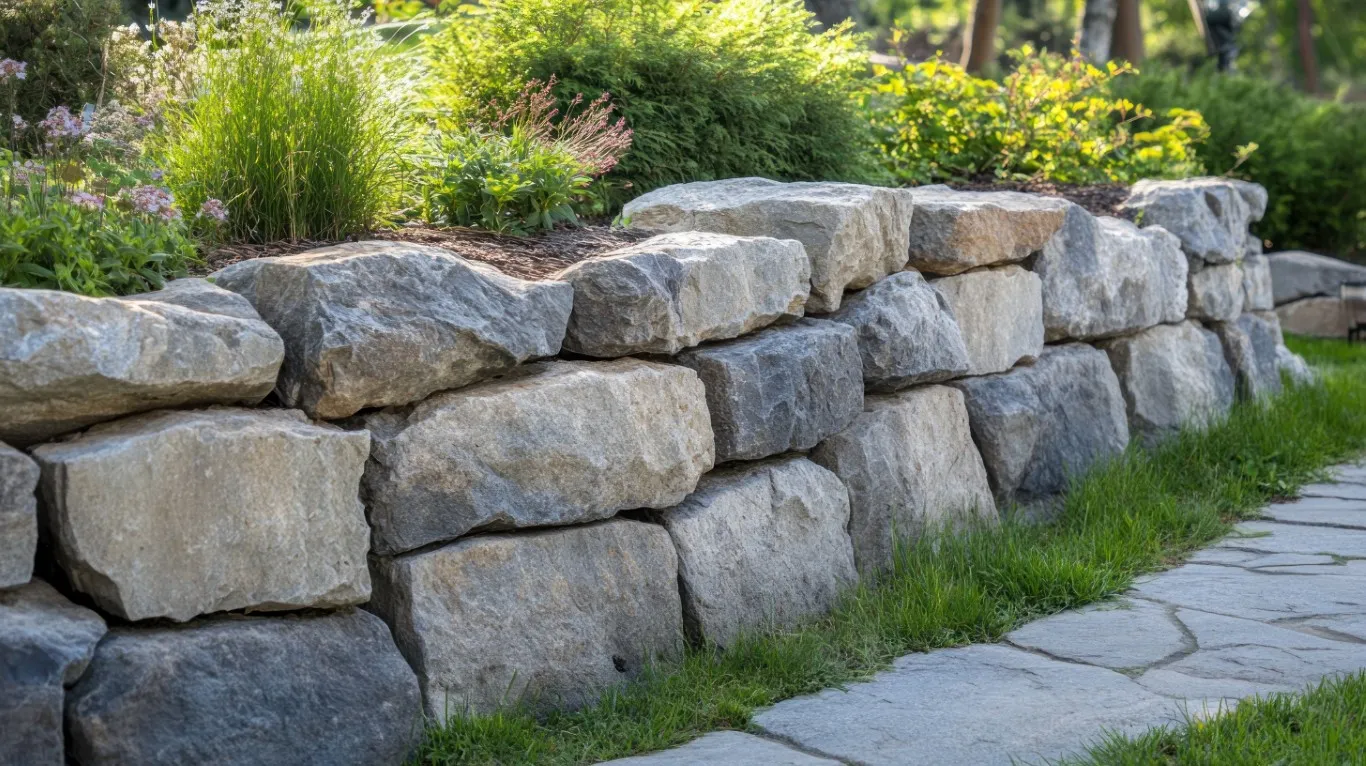
Grazing places a light close to a textured surface, like stacked stone or split-face block, so shadows emphasize every edge. Washing sets the light farther back for an even, softer glow across a smooth wall. If you’re planning a new wall, the guide on how outdoor lighting makes Utah backyards safer and more beautiful is a good starting point, and lighting belongs in that conversation from the start.
Lighting Water Features and Xeriscapes
Lights set in or beside a water feature make moving water sparkle after dark. Water-wise yards light beautifully too: graze a boulder, uplight ornamental grasses so they glow in the breeze, or spotlight a sculptural plant against gravel. A few well-placed accents look better than a gravel field lit like a stage.
What Are the Best Patio Lighting Ideas for Utah Outdoor Living?
The best patio lighting mixes overhead string lights, post or sconce lighting, and fixtures built into pavers, steps, and seat walls, creating a warm, social space for dinners, fire pit nights, and entertaining. These are the patio lighting ideas Utah homeowners ask about most:
- Overhead string lights: The easiest way to make a patio feel like an outdoor room. In windy spots, especially near canyon mouths, hang them from sturdy posts set in footings with a tensioned support cable instead of hooks in the fascia.
- Post and pillar lights: Great at patio corners, gate entries, and the edges of a deck or seating area.
- Integrated paver and step lights: Fixtures set into pavers, stair treads, and seat wall caps look clean and stay out of the way.
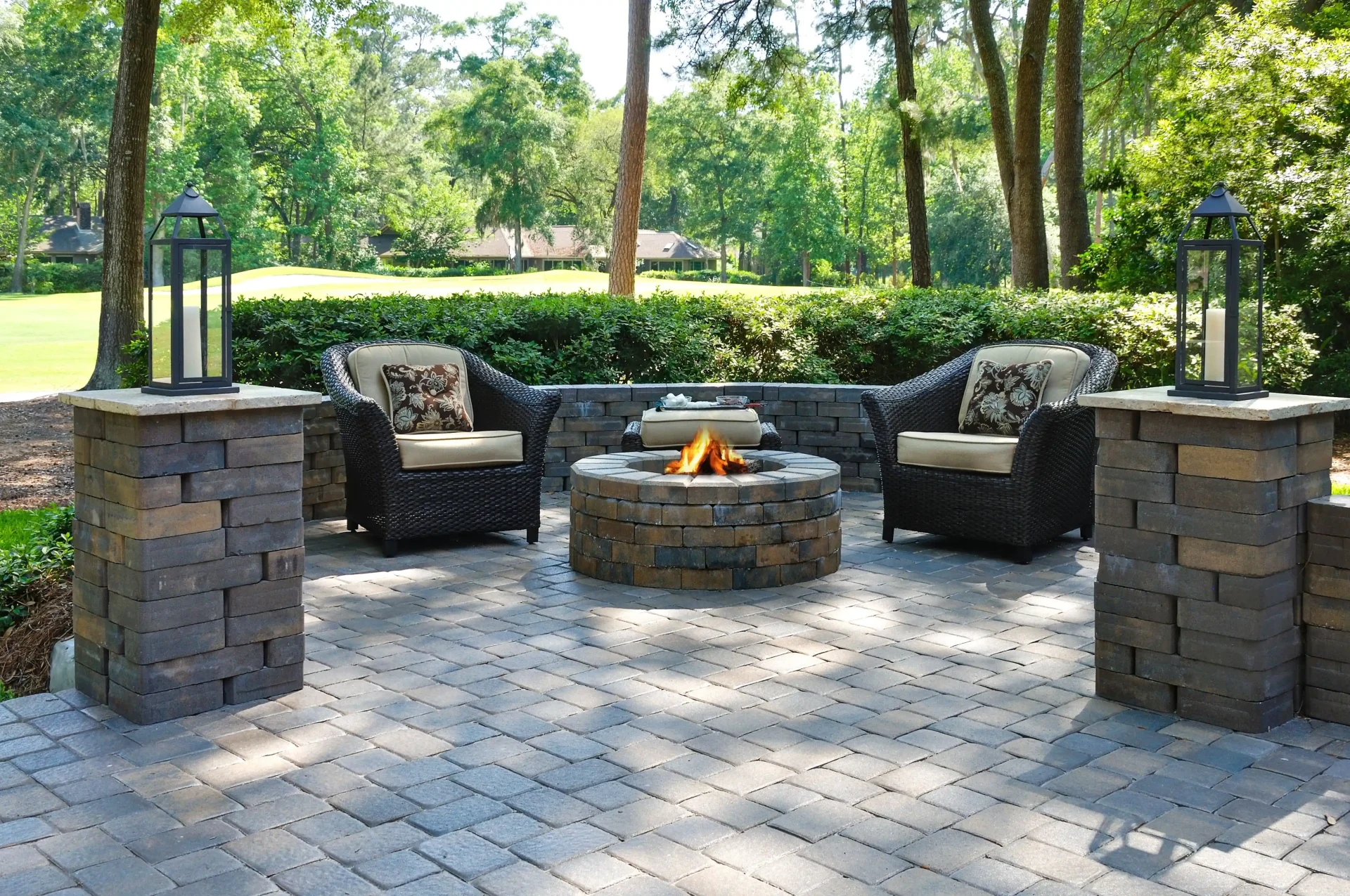
- Fire pit areas: Keep surrounding light low and soft. Light the seating edges and steps, then let the flames do the rest.
A well-lit fire pit area is one of the most-used spots in any Utah backyard at night. Utah Valley Landscaping’s fire pit installation service includes planning the surrounding lighting so the seating zone is safe and comfortable without competing with the fire.
For zone-by-zone planning, see the guide to what’s the best way to light a Utah backyard.
Low-Voltage vs. Line-Voltage vs. Solar: Which Works Best in Utah?
For most Utah backyards, low-voltage landscape lighting is the most flexible choice, line-voltage suits high-output needs like sport court lighting, and solar works best as a supplement in sunny, open spots. Utah’s cold winters, snow cover, and short days affect each differently.
Low-Voltage Landscape Lighting
Low-voltage systems run from a transformer that steps down household power. Fixtures are easy to add, move, or re-aim as plants grow, and wiring is simpler to route through beds and along hardscape. That’s why low voltage landscape lighting Utah homeowners can expand over time is the backbone of most yard plans.
Line-Voltage Lighting
Line-voltage fixtures run on standard household power. They handle high-output needs like sport court poles or large area lights, but installation is more involved and should be handled by a qualified electrician. Check local and HOA requirements before adding tall poles or bright area lighting.
Solar Landscape Lighting
Solar landscape lighting Utah homeowners choose needs no wiring. The trade-off is winter: solar fixtures need direct sunlight to charge, shorter days mean less charging time, and snow on panels blocks the sun entirely. Fixtures shaded by trees or on the north side of the house struggle year-round. For an overview of how solar outdoor lights work, see the U.S. Department of Energy’s Energy Saver guide.
At a glance:
- Installation complexity: Solar is simplest, low-voltage is moderate, line-voltage is most involved.
- Flexibility: Low-voltage is easiest to adjust and expand.
- Best use: Low-voltage for paths, features, and patios; line-voltage for courts and high-output areas; solar for small, sunny accents.
- Winter considerations: Hard-wired systems run on schedule all winter, while solar dims when days are short or panels are snowed over.
Ready to see what a layered plan looks like in your yard? Get a Free Estimate from Utah Valley Landscaping, or call (801) 899-9199.
How Do You Plan a Lighting Design That Grows With Your Yard?
Plan your lighting in zones, run conduit while hardscape is being built, and choose controls and capacity that leave room for future additions. The best time to plan lighting is before the first paver goes down.
- Walk the yard at dusk. Note where your family gathers, walks, and plays, and where it gets dark first.
- Divide the yard into zones: front entry, paths, patio, features, pool, and play areas. Separate zones let you light the patio for dinner without lighting the whole property.
- Coordinate with construction. Sleeves under pavers, wiring inside retaining walls, and footings for sport court poles are far easier to install during the build. Adding step lights to a finished paver patio means lifting pavers or running wire across the surface.
- Build in room to grow. Leave spare conduit to future planting beds or a planned fire pit, and size the system for more fixtures than you need today.
- Choose smart controls. Timers that adjust to sunset handle Utah’s shifting seasons automatically, and app-based controls let you switch zones from your phone.
- Call before you dig. Contact Blue Stakes of Utah 811 so buried utilities are marked before any trenching.
Because Utah Valley Landscaping designs and installs patios, pavers, retaining walls, fire pits, and sport courts, lighting gets planned into the project instead of added as an afterthought. When outdoor lighting installation Utah Valley homeowners need happens alongside the hardscape build, conduit and integrated fixtures go in once, cleanly. No cookie-cutter lighting plans: just a layout built around your yard.
Spring is a great time to plan so your lighting is ready for summer evenings, and fall planning gets you set before snow and short days arrive. Whether you’re in Provo, Orem, Highland, or anywhere in Utah County, Utah Valley Landscaping can help you layer light into your outdoor space. Get a Free Estimate or call (801) 899-9199 to start the conversation.
Frequently Asked Questions
What type of outdoor lighting is best for a Utah backyard?
A layered, low-voltage system is the best fit for most Utah backyards. It combines ambient light for mood, task light for paths and steps, and accent light for trees, walls, and water features. Low-voltage fixtures are easy to reposition as your landscaping matures, and hard-wired systems keep running on schedule through short winter days. Line-voltage can be added for bright needs like a sport court, while solar works as an occasional accent in open, sunny spots.
How do I light a retaining wall or patio in my backyard?
For a textured retaining wall, place fixtures close to the base or build them into the wall so the light grazes the stone and brings out its texture. Smooth walls look better with a light set farther back to wash the surface evenly. On a patio, pair overhead string lights or post lights for a general glow with integrated step, paver, or seat wall lights for safe footing. If you have a fire pit, keep nearby light low so the flames remain the focal point.
Is solar landscape lighting worth it in Utah?
Solar can be worth it for small accents in spots that get full, direct sun most of the day. Its limits show up in winter, when shorter days reduce charging time and snow on the panels can stop charging altogether. Fixtures under trees or on the north side of a house tend to underperform in any season. For paths, steps, and anything you rely on for safety, a hard-wired low-voltage system is the more dependable choice.
What is the difference between low-voltage and line-voltage landscape lighting?
Low-voltage lighting uses a transformer to reduce household power to a lower voltage, which makes wiring simpler to route through planting beds and around hardscape. It is the most flexible option for paths, patios, and feature lighting because you can add or re-aim fixtures over time. Line-voltage lighting runs on standard household current and handles high-output needs like sport court poles or large area lights. Because installation is more involved, a qualified electrician should do line-voltage work, and tall poles may need local or HOA approval.
How many outdoor lights do I need for my backyard?
There is no single number, because the right count depends on your yard’s size, layout, and how your family uses it. Start by walking the yard at dusk to see where people gather and walk and where it gets dark first. Plan task lighting for paths and steps first, then add a few focused accents and enough ambient light to connect the spaces. Staggered path lights and a handful of strong focal points usually look better than lighting every surface, and sizing the system with extra capacity lets you add fixtures later.
Can outdoor lighting be added after a patio or hardscape is already installed?
Yes, but it is usually more work and may limit your options. Adding integrated step or paver lights to finished hardscape can mean lifting pavers or running wire across or around the surface. Freestanding fixtures such as path lights, uplights, and string lights on posts are easier to add later because they don’t need to be built into the structure. If you’re planning future projects, installing conduit or sleeves during construction makes later lighting upgrades much simpler.
How do I keep landscape lights from getting damaged by snow removal in winter?
Set path lights back from driveway and walkway edges where snow gets pushed and piled. In areas you shovel or snowblow often, choose flush-mounted in-ground lights or step riser lights that don’t stick up where a blade can catch them. Mount fixtures on a firm, well-compacted base so freeze-thaw cycles are less likely to tilt them. It also helps to mark fixture locations before the first storm so anyone clearing snow knows where to steer around them.
Your Yard Deserves to Be Used After Dark
Most Utah homeowners have already made a real investment in their outdoor space: a patio, a fire pit, a pathway system, or a backyard that took a full season to build. The problem is that all of it disappears the moment the sun sets. Without a lighting plan, a beautiful yard becomes unusable for most of the evening from September through May, and that’s a significant portion of the year.
Leaving the yard dark doesn’t just mean fewer hours outside. It means the investment you made in hardscape, turf, or water features delivers only half the value it could. Every evening your family heads inside because it’s too dark to stay out is an evening that space isn’t earning its place.
Utah Valley Landscaping designs and installs layered outdoor lighting systems built for Utah County’s climate, from low-voltage pathway and feature lighting to integrated paver and step lights that go in during the hardscape build. Lighting is planned into the project from the start, not bolted on at the end, so conduit is buried cleanly and fixtures are exactly where they need to be.
If your backyard goes dark before the evening is over, it’s time to change that. Visit Utah Valley Landscaping’s Exterior Lighting service page to see what a professional lighting plan looks like, or contact the team to get a free estimate for your yard.